Download Video The Virtues of Fasting in Shawwal: A Path to Year-Round Blessings The Virtue of Fasting Six Days in Shawwal Fasting is one of the greatest acts of worship in Islam, and it brings immense spiritual and physical benefits. While the obligatory fasts of Ramadan are widely observed, many Muslims may not be aware of the additional blessings that come with fasting six days in the Islamic month of Shawwal. The Hadith on Fasting in Shawwal Abu Ayyub Al-Ansari (RAA) narrated that the Messenger of Allah (PBUH) said: “Whoever fasts the month of Ramadan and then follows it with six days of fasting in the month of Shawwal, it will be as if he has fasted the entire year.” (Sahih Muslim 1164) This hadith highlights the immense reward of fasting beyond Ramadan. The reasoning behind this is simple: Allah multiplies each good deed by ten. Therefore, fasting during Ramadan (which consists of 30 days) earns the reward of fasting for 300 days, and adding six more days (6×10 = 60) completes a full year’s worth of fasting. Why Fast in Shawwal? Spiritual Continuity: It helps maintain the discipline of fasting and prevents a sudden break in worship after Ramadan. As a result, it strengthens one’s connection with Allah. Completion of Yearly Rewards: According to the hadith, fasting six days in Shawwal along with Ramadan grants rewards equivalent to fasting the entire year. Consequently, it is an easy way to multiply good deeds. Sign of Acceptance: Continuing to fast after Ramadan serves as an indication that one’s fasting in Ramadan was accepted by Allah. In turn, this motivates believers to remain steadfast in their faith. Forgiveness and Mercy: Fasting is a means of seeking Allah’s mercy, forgiveness, and spiritual purification. Moreover, it helps one develop patience and self-control. How to Fast in Shawwal The six fasts can be observed consecutively or spread throughout the month. Regardless of how they are completed, they bring the same reward. It is a Sunnah and not obligatory. This means that missing them does not incur sin; however, fasting them brings immense rewards. Women who missed fasts in Ramadan due to menstruation are encouraged to first complete their missed obligatory fasts before fasting in Shawwal. This ensures that all religious obligations are fulfilled in the correct order. Conclusion Fasting six days in Shawwal presents a golden opportunity for believers to extend the blessings of Ramadan and gain immense rewards. As we strive to follow the Sunnah of the Prophet Muhammad (PBUH), we should take advantage of this simple yet powerful act of worship, which grants rewards equivalent to fasting an entire year. May Allah accept our fasts and grant us the ability to perform righteous deeds consistently. Ameen!
Laylatul Qadr: The Night of Power and Divine Mercy
Download Video Laylatul Qadr: The Night of Divine Mercy In the blessed month of Ramadan, there lies a night so powerful, so spiritually enriching, that it surpasses a thousand months in virtue. This extraordinary night is Laylatul Qadr (The Night of Decree) a night when Allah writes destinies, forgives sins, and showers divine mercy upon believers. What is Laylatul Qadr? Laylatul Qadr is mentioned in the Qur’an, Surah Al-Qadr (97:1-5): “Indeed, We sent the Qur’an down during the Night of Decree. And what can make you know what is the Night of Decree? The Night of Decree is better than a thousand months. The angels and the Spirit [Jibreel] descend there in by permission of their Lord for every matter. Peace it is until the emergence of dawn.” This means that worship on Laylatul Qadr brings more rewards than 83 years of worship! On this night, Allah revealed the Holy Qur’an to Prophet Muhammad (ﷺ) as guidance for humanity. When is Laylatul Qadr? While the exact date remains unknown, the Prophet (ﷺ) encouraged believers to seek Laylatul Qadr in the last ten nights of Ramadan, particularly on the odd-numbered nights (21st, 23rd, 25th, 27th, and 29th). Many scholars believe the 27th night is the most likely, but devotion throughout all ten nights ensures its blessings. The Significance of Laylatul Qadr Sins Are Forgiven The Prophet (ﷺ) said: “Whoever stands in prayer on the Night of Decree, with faith and hope for reward, Allah will forgive his past sins.” (Bukhari, Muslim) Destiny is Written On this night, Allah decrees the events of the coming year. Angels Fill the Earth Angel Jibreel (AS) and other angels descend, bringing peace, blessings, and mercy. Acceptance of Duas This night provides the perfect opportunity to seek Allah’s mercy, forgiveness, and guidance. How to Make the Most of Laylatul Qadr? Pray Special Night Prayers (Tahajjud & Qiyam-ul-Lail) Spending the night in worship brings immense rewards. The Prophet (ﷺ) encouraged sincere and devoted prayer. Recite Qur’an & Reflect on its Meaning Since Allah revealed the Qur’an on Laylatul Qadr, believers should read, understand, and apply its teachings. Make Abundant Duas (Supplications) Aisha (RA) asked the Prophet (ﷺ) what to say on Laylatul Qadr, and he taught her this powerful dua: اللَّهُمَّ إِنَّكَ عَفُوٌّ تُحِبُّ العَفْوَ فَاعْفُ عَنِّي “Allahumma innaka ‘afuwwun tuhibbul ‘afwa fa‘fu ‘anni” (O Allah, You are Most Forgiving, and You love to forgive, so forgive me). (Tirmidhi) Give Charity (Sadaqah & Zakat) Since good deeds on this night multiply, believers should give charity—helping the needy, feeding the poor, or supporting an Islamic cause to earn immense rewards. Seek Allah’s Forgiveness & Repentance Laylatul Qadr provides an opportunity to turn to Allah sincerely, ask for His mercy, and seek forgiveness for past mistakes. Increase Dhikr (Remembrance of Allah) Engage in Tasbeeh, Tahleel, Takbeer, and Istighfar, praising Allah and seeking His mercy: SubhanAllah (Glory be to Allah) Alhamdulillah (All praise be to Allah) La ilaha illallah (There is no god but Allah) Allahu Akbar (Allah is the Greatest) The Blessings of This Night Worship on Laylatul Qadr carries rewards greater than 1,000 months (83 years) of devotion. Allah has granted this night as a special gift to believers, offering them an opportunity for redemption, purification, and renewal of faith. As Ramadan draws to an end, let us increase our worship, seek Allah’s mercy, and make heartfelt duas. Since we cannot guarantee another Ramadan in our lives, we should seize this golden opportunity and make the most of Laylatul Qadr! May Allah bless us with the guidance, mercy, and rewards of this special night. Ameen!
The 3rd Ashra of Ramadan: Seeking Salvation in the Last Ten Days
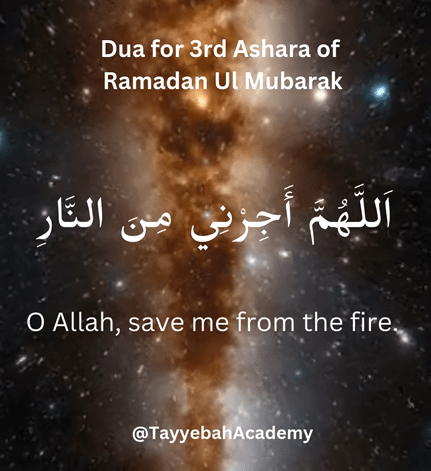
Download Video Dua for the 3rd Ashra of Ramadan: Seeking Salvation in the Last Ten Days Introduction Ramadan is more than just a month of fasting it’s a time of profound spiritual reflection, renewal, and growth. Divided into three segments (Ashras), each of these ten-day periods carries its own blessings and themes. The 3rd Ashra of Ramadan (days 21–30) is especially revered because it focuses on salvation from the Hellfire. During these days, Muslims turn to Allah (SWT) with increased devotion, reciting the powerful dua: اللَّهُمَّ أَجِرْنِي مِنَ النَّارِ O Allah, save me from the Fire. In this blog, we’ll explore the importance of this dua, how to recite it, and ways to maximize your spiritual rewards in the final ten days of Ramadan. The 3rd Ashra of Ramadan: A Time of Salvation Heightened Worship In the last ten nights, Muslims intensify their worship, praying extra Nafl (voluntary) prayers, increasing Dhikr (remembrance of Allah), and spending more time in Quranic recitation. This is a crucial period to seek forgiveness and strengthen your relationship with Allah (SWT). Laylatul Qadr (Night of Power) Within these final nights lies Laylatul Qadr, described in the Quran (97:3) as being “better than a thousand months.” Engaging in worship on this night can bring unimaginable rewards and forgiveness of sins. I’tikaf (Spiritual Seclusion) Many believers observe I’tikaf in the mosque during the last ten days. This practice involves devoting oneself entirely to worship, cutting off worldly distractions, and focusing on prayer, reflection, and connection with the Divine. The Powerful Dua: “اللَّهُمَّ أَجِرْنِي مِنَ النَّارِ” Meaning & Significance Translation: O Allah, save me from the Fire. Purpose: This short yet profound dua encapsulates a believer’s heartfelt plea for protection from Hellfire. By reciting it frequently, we acknowledge our dependence on Allah’s mercy and our commitment to seeking His pleasure. How to Recite After Obligatory Prayers: Recite it at least three times after each Fard (obligatory) prayer. During Night Prayers: Include it in your Qiyam-ul-Layl or Tahajjud, as these prayers hold immense spiritual weight in the final nights of Ramadan. Sincerity & Reflection: As you recite, pause to reflect on the meaning, asking Allah (SWT) for genuine protection and forgiveness. Maximizing Blessings in the Final Ten Days Focus on Repentance Use this time to repent sincerely for any past sins. The doors of forgiveness are wide open, and a repentant heart is beloved to Allah (SWT). Increase Charity Giving Sadaqah (voluntary charity) and paying Zakat-ul-Fitr before Eid are integral parts of Ramadan. Share your blessings with those in need to earn additional rewards and purify your wealth. Observe Extra Prayers Extend your nightly worship by performing Taraweeh and Tahajjud. Even a few extra Rakahs can significantly enhance your spiritual growth. Seek Laylatul Qadr Strive to stay awake and worship on the odd nights (21st, 23rd, 25th, 27th, 29th). Offer heartfelt supplications and read the Quran. Remember, a single moment on Laylatul Qadr can elevate your status in unimaginable ways. Maintain Good Character Fasting is not only about refraining from food and drink but also about refining your character. Practice patience, kindness, and generosity, embodying the spirit of Ramadan. Benefits of “اللَّهُمَّ أَجِرْنِي مِنَ النَّارِ” Strengthens Taqwa (God-Consciousness): Repeating this dua reminds us to live righteously and avoid sinful behavior. Fosters Gratitude: Recognizing our dependence on Allah (SWT) inspires gratitude for every blessing. Encourages Mindfulness: Contemplating the reality of the Hereafter can motivate us to focus on good deeds and purify our intentions. Conclusion The 3rd Ashra of Ramadan is a profound period to seek Allah’s protection from the Hellfire. By sincerely reciting the dua اللَّهُمَّ أَجِرْنِي مِنَ النَّارِ (O Allah, save me from the Fire) and engaging in heightened worship, you open the doors to immense spiritual rewards. These last ten days offer a unique chance to rejuvenate your faith, repent for past shortcomings, and earn blessings that can last well beyond Ramadan. May Allah (SWT) accept our fasts, prayers, and sincere supplications during these blessed nights. Ameen.
Dua for Second Ashra: Seeking Allah’s Forgiveness
Download Video Dua for Second Ashra of Ramadan: Seeking Forgiveness from Allah Ramadan, the blessed month of fasting, reflection, and devotion, is divided into three Ashras (ten-day segments), each carrying its own significance. The second Ashra (11th-20th Ramadan) is known as Ashra of Forgiveness, meaning the “Ten Days of Forgiveness.” It is during this phase that Muslims seek Allah’s mercy and forgiveness for their sins, striving to purify their souls and strengthen their faith. The Importance of Forgiveness Forgiveness is a core concept in Islam. Allah (SWT) is The Constant Forgiver and The Most Merciful, always ready to pardon those who sincerely repent. The second Ashra of Ramadan serves as a divine opportunity for believers to cleanse themselves of past sins and seek Allah’s mercy before the final ten days, which focus on salvation from Hellfire. Prophet Muhammad (PBUH) emphasized the significance of seeking forgiveness in numerous teachings. He taught that those who sincerely ask for Allah’s mercy will find Him the Most Forgiving. Ramadan amplifies this opportunity, as every act of worship and supplication carries multiplied rewards. The Powerful Dua for the Second Ashra A highly recommended supplication (dua) for this Ashra is: Click here to download in gallery -> https://tayyebahacademy.com/dua-for-second-ashra-of-ramadan-seeking-forgiveness-from-allah/ The Powerful Dua for the Second Ashra A highly recommended supplication (dua) for this Ashra is: اَسْتَغْفِرُ اللہَ رَبِّی مِنْ کُلِّ زَنْبٍ وَّ اَتُوْبُ اِلَیْہِ I seek forgiveness from Allah for all my sins and turn to Him. The Power of This Dua This simple yet profound supplication embodies the essence of repentance. It reminds us that no matter how great our sins, Allah’s mercy is greater. By sincerely reciting this dua, we acknowledge our mistakes and turn back to our Creator with a heart full of hope and humility. How to Make the Most of This Ashra? Increase Seeking Forgiveness – Repeatedly recite “I seek forgiveness from Allah” throughout the day, seeking Allah’s mercy. Sincere Repentance – Reflect on past mistakes, seek forgiveness, and make a commitment to avoid sin in the future. Perform Extra Prayers – Engage in Tahajjud, Nafl Salah, and Prayer of Repentance to seek Allah’s forgiveness. Give Charity – Helping those in need earns immense rewards and aids in purifying the soul. Forgive Others – Just as we seek Allah’s forgiveness, we should also forgive those who have wronged us. Recite Quran and Make Dua – Increasing Quran recitation and making personal supplications helps strengthen our connection with Allah. A Final Thought The second Ashra of Ramadan is a golden opportunity to seek Allah’s boundless mercy. We must embrace it wholeheartedly by making sincere repentance and striving to become better Muslims. Let us remember that Allah’s mercy knows no bounds—He loves those who turn to Him with humility and sincerity. May we all be granted His forgiveness and mercy in this blessed month. Ameen!
The First Ashra of Ramadan: A Time to Seek Allah’s Mercy
Download Video The First Ashra of Ramadan: A Time to Seek Allah’s Mercy Ramadan is a sacred month for Muslims worldwide, divided into three Ashras (ten-day segments). Each Ashra holds a special significance, guiding believers in their spiritual journey. The first Ashra (days 1-10) is known as the Ashra of Mercy (Rahmah), emphasizing Allah’s boundless compassion and the importance of seeking His forgiveness. The Importance of Mercy in the First Ashra The first Ashra reminds us that Allah’s mercy is greater than all sins. No matter how many mistakes we have made, turning to Him with sincerity ensures His forgiveness. The Prophet Muhammad (PBUH) said: “Indeed, Allah’s mercy overcomes His wrath.” (Sahih Bukhari 3194) During these ten days, Muslims are encouraged to:Repent sincerely and seek Allah’s mercy.Increase worship through extra prayers and Quran recitation.Show mercy to others, as Allah loves those who are kind. Dua for the First Ashra of Ramadan A special supplication (dua) for the first ten days is: رَبِّ اغْفِرْ وَارْحَمْ وَأَنتَ خَيْرُ الرَّاحِمِينَ(Translation: “O Lord, forgive and have mercy, for You are the best of those who show mercy.”) This dua, derived from the Quran (Surah Al-Mu’minun 23:118), serves as a powerful reminder to ask for forgiveness and trust in Allah’s compassion. How to Make the Most of the First Ashra Pray with sincerity Perform extra Nafl prayers and Taraweeh. Seek forgiveness Repeat the dua and make istighfar frequently. Give charity Help those in need as an act of kindness. Practice patience and kindness Be merciful to others in daily interactions. Conclusion The first Ashra of Ramadan sets the foundation for spiritual growth. By focusing on Allah’s mercy, we prepare ourselves for deeper self-reflection, devotion, and connection with our Creator throughout the rest of the holy month. May Allah grant us His mercy and accept our prayers in this blessed month!
The Power of Kindness and a Smile in Islam
Download Video The Power of Kindness and a Smile in Islam The Power of Kindness : In Islam, kindness is not just a virtue it is an obligation. The teachings of the Prophet Muhammad (peace be upon him) emphasize the immense value of being kind, gentle, and considerate towards others. Even a small act of kindness, like offering a smile, can have a profound impact on someone’s heart. A Smile: A Simple Yet Powerful Act of Charity The Prophet (peace be upon him) said, “Your smile for your brother is a charity.” (Tirmidhi) This hadith highlights that even something as effortless as a smile is considered an act of Sadaqah (charity) in Islam. A smile can uplift someone’s spirit, bring comfort to a troubled heart, and foster bonds of brotherhood and unity. Kindness: A Core Islamic Identity Islam teaches that kindness is not optional it is a defining characteristic of a true believer. The Qur’an repeatedly emphasizes mercy and compassion. Allah says:“And speak to people good words.” (Qur’an 2:83)The Prophet (peace be upon him) was known for his unparalleled kindness. He treated everyone with respect, regardless of their background. From feeding the hungry to forgiving those who wronged him, his life is a testament to the importance of being kind. Living with Kindness: A Reflection of Faith Practicing kindness in daily life is a way of embodying Islamic teachings. Whether it is helping a stranger, showing patience with family, or even refraining from hurtful words, every act of kindness is a step closer to Allah’s pleasure. As Muslims, we must remember that our character defines us. Let us strive to be a source of positivity in the lives of others starting with something as small as a smile. Explore more blogs here!
Modesty in Islam: More Than Just Dress A Reflection of Faith
Download Video Modesty in Islam: More Than Just Dress A Reflection of Faith Modesty in Islam (haya’) Modesty is a beautiful and fundamental principle in Islam that extends far beyond clothing. It encompasses our speech, actions, and the way we engage with others. True modesty in Islam is about carrying oneself with dignity, humility, and faith, creating a balanced and respectful society. What Does Islam Say About Modesty? Islam teaches that modesty is deeply connected to faith. The Prophet Muhammad (ﷺ) said: “Modesty is a branch of faith.” (Sahih Muslim, 35) This hadith highlights that modesty is not just an external practice but a reflection of one’s inner belief and devotion to Allah. It shapes a Muslim’s actions, words, and behavior, fostering self-respect and a sense of accountability. Modesty in Clothing and Appearance Islam encourages both men and women to dress in a way that reflects humility and self-respect. The Quran states: “Tell the believing men to lower their gaze and guard their modesty… And tell the believing women to lower their gaze and guard their modesty and not to display their adornments except what is apparent of it…” (Quran 24:30-31) This verse underscores that modesty in dress applies to both genders, promoting a culture of mutual respect. However, modesty in Islam is not limited to attire—it is about how one carries themselves with grace and decency. Modesty in Behavior and Speech True Islamic modesty is reflected in the way we speak and interact with others. A modest person is kind, respectful, and mindful of their words. The Prophet (ﷺ) emphasized: “The most perfect believer in faith is the one with the best character.” (Sunan Abu Dawood, 4682) This means that a person’s conduct should reflect humility, patience, and compassion. Avoiding arrogance, gossip, and harsh speech is a sign of true modesty and contributes to a harmonious society. Walking with Dignity and Grace Modesty also includes how we present ourselves in everyday life. The Quran warns against arrogance and excessive pride: “And do not walk upon the earth exultantly. Indeed, you will never tear the earth [apart], and you will never reach the mountains in height.” (Quran 17:37) This verse teaches that humility and grace should define a believer’s presence. Whether in speech, appearance, or daily interactions, modesty reflects sincerity and righteousness, creating a positive impact on those around us. Modesty as a Way of Life In Islam, modesty is a holistic concept that goes beyond external appearances. It is about embodying humility, respect, and moral excellence in every aspect of life. By embracing modesty in dress, speech, and behavior, a believer strengthens their relationship with Allah and fosters a community built on dignity and self-respect. Final Thoughts: Modesty is a powerful trait that enriches both individuals and society. How do you incorporate modesty into your daily life? Share your thoughts in the comments below!