🌟 Why Halal Food Matters for Muslims
For Muslims, consuming Halal food is not just a personal choice—it’s a religious obligation. Every bite we take should align with the guidelines set by Allah ﷻ in the Qur’an and Sunnah. That means ensuring the food is pure (tayyib), ethically sourced, and free from anything haram, such as pork, alcohol, or improperly slaughtered meat.
In countries like China, where diverse food traditions flourish,zit becomes essential to identify and choose Halal options carefully. Fortunately, China is home to more than 20 million Muslims, including Hui and Uyghur communities, who have preserved a rich and authentic Halal culinary tradition for centuries.
Halal food in China is more than just “permissible”. .it’s deeply cultural, often tied to traditional recipes passed down through generations. These dishes reflect the beauty of Islamic values, Chinese heritage, and culinary craftsmanship all on one plate.
As stated by Islamic Relief Worldwide:
“Halal is more than a dietary requirement. It’s part of an entire way of life that seeks purity, cleanliness, and ethics in all matters—including food.”https://www.islamic-relief.org/what-is-halal-food/
So whether you’re a practicing Muslim at home or abroad, learning about authentic Halal dishes helps you stay connected to your faith, your body, and your culture.
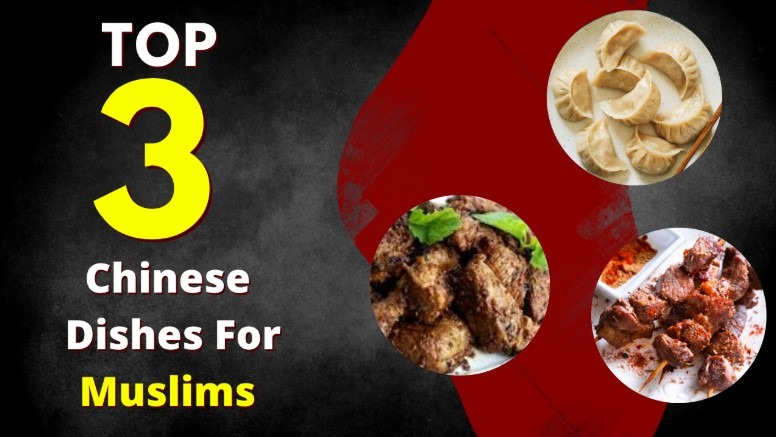
In this blog, we highlight three iconic Halal Chinese dishes that you must try—each one delicious, authentic, and 100% Muslim-friendly.
🍢 1. Lamb Kebab (Yang Rou Chuan) — The Ultimate Halal Street Feast
🔹 What is Yang Rou Chuan?
Yang Rou Chuan, also known as lamb kebabs, are one of the most iconic and beloved Halal dishes in China. These juicy, flavorful skewers originate from the Uyghur Muslim community in Xinjiang Province and are now enjoyed all across China.
Each kebab is grilled to perfection over an open flame and seasoned with a special mix of:
- Cumin
- Chili flakes
- Salt
- Garlic powder
- Sesame seeds (optional)
The final dish is flavorful, tender, and rich in traditional spices—perfectly aligned with Halal dietary principles. and completely free from pork or alcohol.

✅ Why It’s Halal-Friendly
| Feature | Details | ||||
| Muslim-owned Restaurants | Typically cooked and served by Hui or Uyghur Muslims in Halal-certified kitchens | Zabihah Meat | Sourced and slaughtered by Muslim butchers according to Islamic law | Natural Ingredients | No artificial flavors, alcohol, or pork-derived substances |
📍 Where to Eat Yang Rou Chuan in China
🥇 1. Silk Road Impression Restaurant – Beijing
A famous Uyghur restaurant with an elegant atmosphere and strictly Halal menu. Their lamb kebabs are marinated overnight and cooked fresh to order.
- Address: No. 2 Yabao Rd, Chaoyang, Beijing
- Review Source: TripAdvisor – Silk Road Restaurant Beijing
- Why Go? Trusted by local Muslims and tourists alike, with prayer-friendly facilities.
🥈 2. Xibo Xinjiang Cuisine – Shanghai
Xibo is a modern restaurant chain that brings authentic Uyghur cuisine to Shanghai. Their lamb skewers are made using traditional recipes from the Tianshan region of Xinjiang.
- Address: 3/F, 3-4 Bldg, Hongmei Pedestrian Street, Minhang, Shanghai
- Official Website: www.xiborestaurant.com
- Why Go? Clean, stylish, Halal-friendly menu, ideal for families or business guests.
🍜 2. Mutton Dumplings (Halal Baozi / Jiaozi)
Halal mutton dumplings—often called Baozi (steamed buns) or Jiaozi (boiled dumplings)—are a beloved comfort food among Muslim communities in China. These dumplings are stuffed with finely minced mutton, chopped onions, fresh herbs, and traditional Halal seasonings. They’re either steamed to perfection or boiled, offering a juicy and flavorful bite that pairs perfectly with soy-based dipping sauces (alcohol-free).
Originating from Hui Muslim households, these dumplings are crafted with attention to Islamic dietary guidelines. They’re not just filling, but a symbol of warm hospitality and cultural richness among Muslims in China.

✅ Why It’s Halal-Friendly:
- ✔️ Prepared using zabihah (properly slaughtered) mutton
- ✔️ No use of wine, pork, or lard in the fillings or dough
- ✔️ Made in Halal-certified kitchens, often by Muslim chefs
📍 Where to Find It:
1. Yi Xin Zhai Halal Restaurant – Beijing
- Address: No. 82, Wangfujing Street, Dongcheng District, Beijing
- Known for: Authentic Hui-style mutton dumpling
2. Qingzhen Dumpling House – Xi’an
- Address: 203 West Muslim Street, Xi’an, Shaanxi
- Offers: Halal dumplings and other local snacks in a Muslim-friendly setting
- Trip.com reference
🐪 3. Camel Meat Stew (Halal Camel Hotpot)
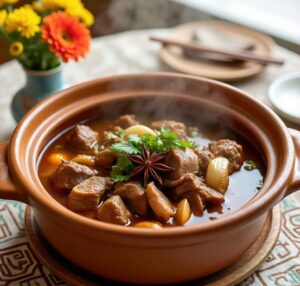
Camel meat stew, known as Luotuo Rou Dun, is one of the rarest and most treasured dishes in Chinese Halal cuisine. Rich in flavor, this dish features slow-cooked camel meat—tender, nutritious, and deeply spiced. It is simmered with garlic, black cardamom, star anise, and native herbs that enhance the natural flavor of the camel meat. Often served as a winter delicacy, it’s both hearty and deeply rooted in Muslim culinary heritage in western China.
This dish is a favorite in regions with large Muslim populations like Gansu, Ningxia, and Inner Mongolia. Camel meat is considered Sunnah in Islamic tradition and is also praised for its health benefits, including being low in fat and high in protein.
✅ Why It’s Halal-Friendly:
- ✔️ Camel meat is Halal and often prepared in Islamic slaughterhouses
- ✔️ No alcohol, pork derivatives, or cross-contamination
- ✔️ Culturally respected and linked to Sunnah traditions
📍 Where to Find It:
1. Lanzhou Muslim Camel Meat Restaurant
- Address: 36 Jiefang Road, Chengguan District, Lanzhou
- Offers: Traditional camel hotpot and Hui cuisine
2. Ningxia Muslim Camel Cuisine Hall – Yinchuan
- Address: 14 Minzhu North Street, Yinchuan
- Specialty: Camel meat stew served with Uyghur-style naan
Conclusion
Halal food is far more than a culinary preference—it is a deeply spiritual obligation that reflects a Muslim’s devotion to the teachings of the Qur’an and Sunnah. For Muslims, every meal should not only be delicious, but also pure (tayyib), lawful (halal), and ethically prepared. Choosing Halal food is a daily act of faith, a way of nourishing the body without compromising spiritual values.
In the vast and diverse culinary landscape of China, the presence of long-standing Muslim communities such as the Hui and Uyghur has helped preserve a rich tradition of Halal cuisine. Dishes like Yang Rou Chuan (Lamb Kebabs), Mutton Dumplings, and Camel Meat Stew are not only flavorful but deeply connected to Islamic history and values. Each one reflects a unique blend of Islamic dietary ethics, Chinese culinary art, and community traditions passed down through generations.
As the demand for authentic and verified Halal food grows globally, it becomes even more important for Muslims—whether students, locals, or international guests—to be mindful of what they consume. By choosing Halal restaurants, checking for zabihah practices, and supporting Muslim-owned businesses, we ensure that our food sustains both our health and our deen (faith).
This blog aimed to highlight three iconic Halal Chinese dishes that every Muslim should know about—not just for their taste, but for their connection to Islamic identity in a non-Muslim majority country. These meals serve as reminders that, no matter where we are, we can always find a way to remain true to our values.
May every bite you take be Halal, blessed, and fulfilling—both for the body and the soul.