

The 1965 Pakistan and India War History stands as a defining moment in South Asian history, shaping military strategies, political decisions, and national pride. Beginning on September 6, 1965, this war reflected deep-rooted tensions over Kashmir and highlighted the courage of the Pakistani Armed Forces. From Operation Grand Slam to the Pathankot Airstrike, the role of the Pakistan Air Force, and the resilience of civilians, this war is remembered as a testimony of faith and determination. As the Qur’an reminds us:
وَقُلْ جَآءَ ٱلْحَقُّ وَزَهَقَ ٱلْبَـٰطِلُ ۚ إِنَّ ٱلْبَـٰطِلَ كَانَ زَهُوقًۭا ٨١
“The truth has come and falsehood has vanished. Indeed, falsehood is bound to vanish.”
1. 6th September 1965 – The Day of Valor
The 1965 Pakistan and India War History officially escalated on September 6, when Indian forces crossed the international border near Lahore. Pakistan responded with full force, defending its sovereignty with unmatched courage. This date is celebrated as Defense Day in Pakistan, honoring those who sacrificed their lives. It also became a symbol of unity, resilience, and the unwavering spirit of the nation. Just as Pakistan Independence Day marked freedom in 1947, September 6 reinforced the need to protect that independence at all costs.
1.1 Lahore Front Defense
On September 6, Indian forces advanced toward Lahore, but Pakistan Army’s 10th Division and civilian volunteers halted their progress. The courage shown at Burki and Wagah became legendary, inspiring generations to defend their homeland. The 1965 Pakistan and India War History highlights how unity and faith played a central role in protecting Lahore from falling.
1.2 Civilian Role in 1965 War
Ordinary Pakistanis became extraordinary heroes. Civilians dug trenches, provided food, and supported the army. Women actively engaged in medical care while students volunteered to strengthen morale. The 1965 Pakistan and India War History reflects how this people’s participation transformed the war into a national cause, proving that defending freedom is everyone’s duty.
1.3 Symbol of National Unity
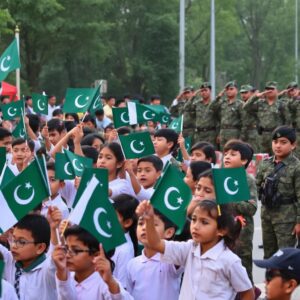
Defense Day, celebrated annually, is not only a military commemoration but also a cultural event. Songs, speeches, and prayers remind the younger generation of the sacrifices made. The 1965 Pakistan and India War History reinforces the lesson that national unity is the backbone of survival in times of aggression.
2. Operation Grand Slam – Turning Point of the War
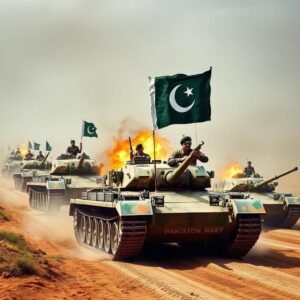
One of the most decisive campaigns in the 1965 Pakistan and India War History was Operation Grand Slam, launched on September 1, 1965. The plan was bold: capture the strategic town of Akhnoor in Jammu, which served as a lifeline for Indian forces in Kashmir. Success here would have cut India’s major supply route and opened the door for Pakistan to strengthen its position in the disputed territory. At first, Pakistani forces gained momentum, surprising the Indian Army with their swift advance. However, due to leadership changes and operational delays, the campaign did not achieve its full potential. Many historians believe that had the plan been executed without disruption, the entire outcome of the war might have been different.
2.1 Strategic Goals of Operation
The main goal of Operation Grand Slam was to break India’s control in Kashmir by choking its logistical backbone. Akhnoor was not just a small town; it was India’s crucial supply line to its forces stationed in the valley. By targeting this point, Pakistan intended to isolate Indian troops and force them into a weaker position. The 1965 Pakistan and India War History highlights this operation as a symbol of Pakistan’s determination to liberate Kashmir from illegal occupation.
2.2 Challenges and Delays
Despite an impressive beginning, the operation faced setbacks. Unexpected delays and sudden changes in command slowed the Pakistani advance. These pauses gave the Indian Army critical time to regroup and strengthen its defenses. As a result, the momentum of the operation was lost. The 1965 Pakistan and India War History shows that in military conflicts, timing, unity, and leadership are as important as strategy itself.
2.3 Lessons from Grand Slam
Although Operation Grand Slam did not achieve its ultimate objective, it left behind valuable lessons. The campaign displayed the courage, discipline, and sacrifice of Pakistani soldiers who fought with unwavering spirit. Military analysts today continue to study it as a case of how leadership changes can impact battlefield outcomes. The 1965 Pakistan and India War History ensures that the bravery shown during this operation is remembered, inspiring future generations of Pakistan’s armed forces.
3. PAF Dominance in 1965 War
The Pakistan Air Force (PAF) earned global recognition during the 1965 Pakistan and India War History. Despite being smaller in size, PAF carried out daring missions, including the famous Pathankot Airstrike, which destroyed several Indian aircraft on the ground. Air Commodore M.M. Alam’s record of shooting down five Indian jets in less than a minute became legendary. PAF’s performance proved that skill, discipline, and faith can overcome numerical superiority.

3.1 Pathankot Airstrike Explained
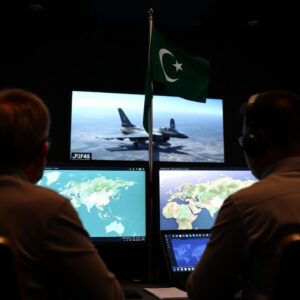
On September 6, 1965, the Pakistan Air Force (PAF) launched a surprise airstrike on the Indian Air Force base at Pathankot. Within minutes, PAF fighters destroyed 13 Indian aircraft, crippling India’s air defense in the region. The attack not only disrupted Indian supply lines but also boosted Pakistan’s confidence. Military historians describe this as one of the most successful aerial missions in South Asia’s history. In the 1965 Pakistan and India War History, Pathankot stands as a classic example of planning, speed, and execution.
3.2 Role of M.M. Alam
Among the heroes of this war, Squadron Leader M.M. Alam became a living legend. During dogfights, he shot down five Indian jets within a few minutes, a record that astonished the world. His unmatched skill, faith, and courage continue to symbolize the strength of Pakistan’s air defense. In the 1965 Pakistan and India War History, M.M. Alam’s story is remembered as a blend of patriotism and professionalism, inspiring generations of PAF pilots.
3.3 Impact on Global Perception
The success of Pathankot and PAF’s dominance shocked international observers. Analysts around the world praised Pakistan’s air strategy and precision. Some countries even studied PAF’s tactics as models of efficiency. The 1965 War History highlights this achievement as decisive in maintaining air superiority and shaping the global perception of Pakistan as a capable military power.
4. Sacrifices of the Pakistani Nation – Unity in Action
The 1965 Pakistan and India War History is not only remembered for its military operations but also for the unmatched sacrifices of the Pakistani nation. From soldiers at the frontlines to women, children, and common citizens, everyone stood united for the defense of the homeland. Their contributions reflected the true spirit of faith, courage, and patriotism.
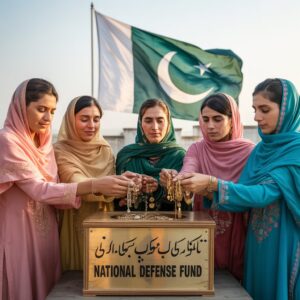
4.1 Women’s Sacrifice of Jewelry
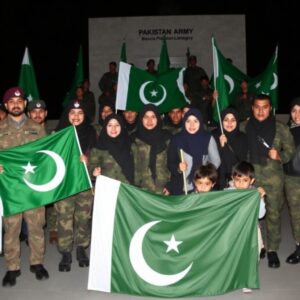
Pakistani women played a crucial role by donating their gold and jewelry to the national defense fund. They stood shoulder to shoulder with the armed forces, proving that the protection of Pakistan was above all worldly possessions. This sacrifice became a symbol of their love and commitment to the country.
4.2 Children’s Pocket Money Donations
Children, though too young to fight, showed immense patriotism by giving their pocket money and savings for the war effort. The 1965 Pakistan and India War History highlights how even the youngest citizens displayed extraordinary loyalty to their homeland.

4.3 Collective National Spirit
Ordinary citizens contributed through blood donations, volunteer services, and supporting soldiers’ families. The unity between the armed forces and the people became a shield of strength. This collective sacrifice ensured that Pakistan stood firm against a much larger enemy, leaving behind a legacy of bravery and resilience.
1965 Pakistan and India War History – A Legacy of Courage”
The 1965 Pakistan and India War History remains one of the most defining chapters in the region’s struggle, marked by courage, sacrifice, and unity. Indeed, it was not just a battle of weapons; rather, it was also a clash of determination. Moreover, the Pakistani Armed Forces and civilians together stood united, and thus they defended their homeland with honor.”” From the Lahore front to Operation Grand Slam and the heroic role of the Pakistan Air Force, every moment reflected resilience. The 1965 Pakistan and India War History continues to inspire generations, reminding us that true strength lies in faith, sacrifice, and national unity.