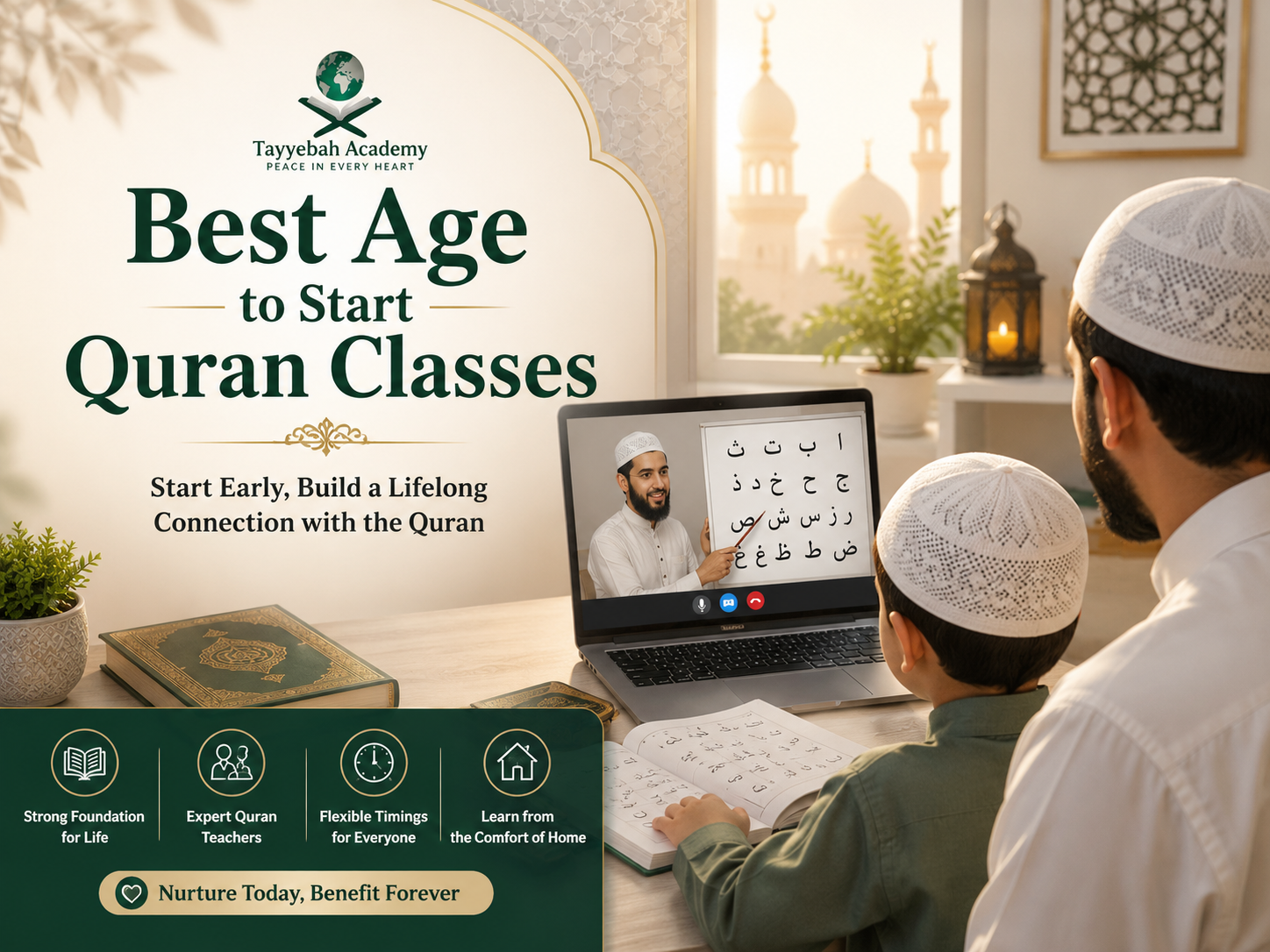
Every Muslim parent wants their child to develop a strong and lasting connection with the Quran. But one important question often comes up: What is the best age to start Quran classes?
There is no single age that is right for every child. Children develop differently, and their ability to concentrate, read, memorize, and follow instructions varies. However, parents can introduce Quran learning from an early age and gradually increase the level of structured learning as the child becomes ready.
Allah says:
“And We have certainly made the Quran easy to remember. So is there anyone who will be mindful?”
Surah Al-Qamar 54:17
This beautiful ayah reminds us of the accessibility of the Quran and encourages us to engage with it. The goal is not simply to start as early as possible, but to help a child develop love, respect, and a lifelong relationship with the Quran.
Why Should Children Learn the Quran at an Early Age?
Early childhood can be a valuable time to introduce children to Quran recitation, Arabic letters, short surahs, and simple Islamic teachings. At this stage, learning should be gentle and encouraging rather than focused on pressure or competition.
Parents can start by allowing children to listen to Quran recitation, encouraging them to repeat short surahs, teaching them simple duas, and helping them become familiar with Arabic letters.
The Prophet Muhammad ﷺ also emphasized the great virtue of learning and teaching the Quran. He said:
“The best among you are those who learn the Quran and teach it.”
Sahih al-Bukhari 5027
This hadith highlights the importance of Quran education and the virtue of passing Quranic knowledge on to others. Parents can therefore make Quran learning an important part of their child’s upbringing from an appropriate age.
What Is the Best Age to Start Quran Classes?
Rather than focusing on one fixed age, parents should consider their child’s readiness, attention span, ability to follow instructions, and interest in learning.
The right starting point may be different for every child. Some children may enjoy short Quran lessons at an early age, while others may need more time before they are ready for structured classes.
Ages 3–5: Building Familiarity
For many children, ages three to five can be a good time to introduce basic Quran learning in a simple and enjoyable way.
At this age, children can begin with:
- Learning Arabic letters
- Listening to Quran recitation
- Repeating short surahs
- Learning simple Daily Duas
- Becoming familiar with Islamic manners
- Learning through short and engaging lessons
A Noorani Qaida course can be particularly useful when a child is ready to recognize Arabic letters and sounds.
The focus at this stage should be on familiarity and love for learning rather than expecting a child to memorize large portions of the Quran.
Ages 6–9: Developing Structured Learning
As children become older, many are able to participate in more structured Quran classes. They may be ready to spend more time learning Noorani Qaida, improving Quran recitation, studying Tajweed, memorizing selected surahs, and learning basic Islamic teachings.
However, there is no Islamic rule that every child must begin formal Quran classes at exactly six or seven years old. Some children are ready earlier, while others need more time.
The Prophet Muhammad ﷺ gave specific guidance regarding Salah. He said:
“Command your children to pray when they are seven years old…”
Sunan Abi Dawud 495
This hadith specifically concerns teaching children Salah. It should not be understood as establishing a fixed age for starting Quran classes. Rather, it demonstrates the importance of gradually introducing children to religious practice as they grow.
Ages 10 and Above: It Is Never Too Late
If your child has not started Quran classes yet, there is no reason to feel discouraged.
Older children can still learn Noorani Qaida, improve their Quran recitation, study Tajweed, memorize the Quran, and learn essential Islamic knowledge. What matters most is having a suitable teacher, a consistent routine, and an encouraging learning environment.
The Quran is a source of guidance for people of all ages, and learning can begin at any stage of life.
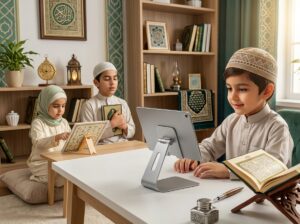
What Should Children Learn First?
A child’s learning path can be adjusted according to their age, ability, and current level of Quran knowledge.
1. Noorani Qaida
Noorani Qaida provides a foundation for beginners. Children learn Arabic letters, basic sounds, and reading patterns before progressing toward fluent Quran recitation.
A strong foundation can make it easier for children to develop accurate pronunciation as they progress.
2. Quran Recitation and Tajweed
Once children have developed basic reading skills, they can work on Quran recitation and Tajweed. A qualified teacher can help correct pronunciation and improve recitation gradually.
Tajweed is especially important because children need guidance in pronouncing Arabic letters and Quranic words correctly.
3. Salah Course
Children should also learn how to perform Salah correctly and understand the importance of prayer in their daily lives.
The Quran emphasizes the importance of establishing prayer. Allah says:
“Indeed, prayer has been decreed upon the believers a decree of specified times.”
Surah An-Nisa 4:103
Teaching children about Salah alongside their Quran education can help them develop good Islamic habits as they grow.
4. Daily Duas and Six Kalimas
Learning Daily Duas and the Six Kalimas helps children become familiar with important Islamic words, supplications, and foundational teachings that they can practice in their everyday lives.
These lessons can complement Quran learning by helping children apply Islamic knowledge to their daily routines.
5. Hifz Program
Children who show interest and readiness for memorization can begin a structured Hifz program.
The pace should be appropriate for the child’s ability, with regular revision to strengthen retention. Parents should focus on consistency and understanding the responsibility of memorizing the Quran rather than putting unnecessary pressure on the child.
6. Stories of the Prophets
Stories of the Prophets can make Islamic learning meaningful and engaging for children. Through these stories, children can learn important lessons about faith, patience, obedience, courage, trust in Allah, and good character.
The Quran itself gives us examples of parents teaching children about faith and character. Allah tells us about Luqman’s advice to his son:
“And ˹remember˺ when Luqmân said to his son, while advising him, “O my dear son! Never associate ˹anything˺ with Allah ˹in worship˺, for associating ˹others with Him˺ is truly the worst of all wrongs.”
Surah Luqman 31:13
This provides a beautiful example of nurturing faith and Islamic values through loving and thoughtful guidance.
How Parents Can Build a Strong Quran Learning Habit
Starting Quran classes is only the first step. Parents can support their child’s progress by creating a positive and consistent learning environment at home.
Make Quran Learning Part of Daily Life
Set a regular time for Quran reading, revision, or listening to recitation. Even a few minutes each day can help children develop consistency and make Quran learning a natural part of their routine.
Encourage Your Child
Praise your child’s effort and progress instead of focusing only on memorization speed. Positive encouragement can help children feel confident and enjoy their Quran learning journey.
Connect Learning With Daily Life
Help your child practice what they learn. Encourage them to use Daily Duas, discuss lessons from the Stories of the Prophets, and revise their Quran lessons at home.
Why Choose Online Quran Classes at Tayyebah Academy?
For busy Muslim families, online Quran classes provide a convenient way for children to learn from home while receiving guidance from experienced teachers.
Flexible Timings
Tayyebah Academy offers flexible class timings, allowing parents to choose a schedule that works around school, work, and family routines.
Personalized Learning
Every child learns differently. Our teachers adjust lessons according to each student’s ability and progress, providing individual attention throughout the learning process.
Quran and Islamic Courses
Tayyebah Academy offers:
- Noorani Qaida
- Salah Course
- Tajweed Course
- Hifz Program
- Daily Duas
- Six Kalimas
- Stories of the Prophets
These courses help children develop Quran reading skills, improve their Islamic knowledge, and build good habits step by step
Start Your Child’s Quran Journey with Tayyebah Academy
If you are still wondering about the best age to start Quran classes, remember that the right time depends on your child’s readiness. You do not need to wait for a particular birthday. You can begin by introducing your child to the Quran gently and gradually build a structured learning routine as they grow.
At Tayyebah Academy, we aim to make Quran learning accessible, flexible, and engaging for children. Whether your child is a complete beginner or already knows how to read the Quran, our teachers can help them progress step by step.
Try Our 3-Day Free Trial
Want to see whether online Quran classes are suitable for your child?
Tayyebah Academy offers a 3-day free trial so parents can experience our teaching approach before enrolling.
Final Thoughts
So, what is the best age to start Quran classes?
There is no fixed age for every child. Some children may be ready during preschool years, while others may benefit from starting structured classes later. What matters most is the child’s readiness, consistent learning, and a supportive environment.
With patience and the right teacher, children can gradually improve their Quran reading, Tajweed, Salah, Daily Duas, and memorization while building a strong foundation in Islamic knowledge.
May Allah make the Quran the light of our children’s hearts and make them among those who learn and teach His Book. Ameen.
Explore our other helpful articles on online Quran learning and Islamic education for children.
How Kids Can Learn The Quran Online: A Practical Guide for Parents
A Complete Guide to Choosing the Best Online Quran Classes with Free Trial
Learn Online Quran Recitation in Ramadan – A moment to deepen your faith