📌 Introduction
Halal food in Islam is not just a dietary rule — it’s a reflection of faith and purity. Based on the Quran and Sunnah, Halal emphasizes eating what is lawful (ḥalāl) and pure (ṭayyib), promoting both spiritual and physical well-being. Many believe Halal only relates to meat or religious rituals, but in fact, it covers hygiene, ethics, and intention.
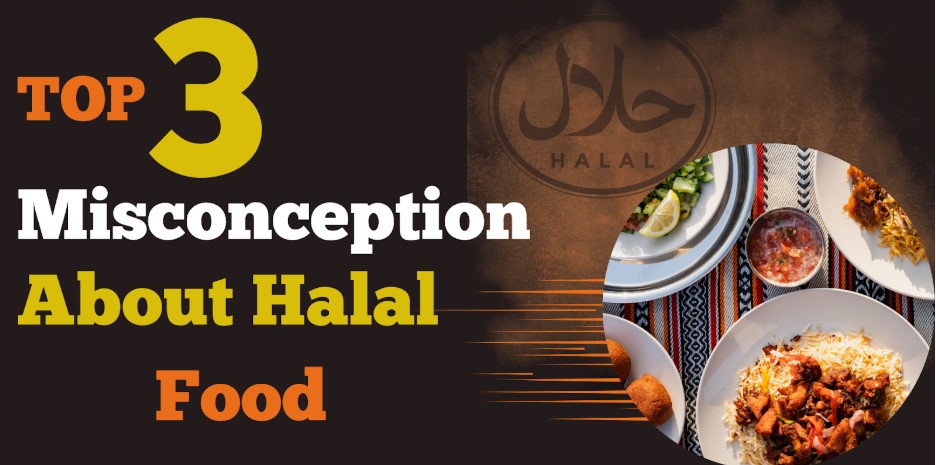
Due to global misconceptions, even Muslims may misunderstand what truly qualifies as Halal. This blog addresses the top three most common misconceptions and corrects them using facts grounded in Islamic teachings.
📖 O humanity! Eat from what is lawful and good on the earth, and do not follow Satan’s footsteps. He is truly your sworn enemy.
— Surah Al-Baqarah (2:168)

🟠 1. Misconception: Halal Food is Only for Muslims
Many assume that Halal food is only for Muslims, but that’s a widespread misconception. Halal food is based on principles of cleanliness, safety, and ethical treatment — values that appeal to anyone seeking pure and healthy nutrition.
Halal guidelines ensure that food is free from harmful substances, processed hygienically, and prepared with compassion. That’s why more non-Muslims around the world are now choosing Halal-certified products for their health benefits, quality standards, and ethical sourcing.
📖 The Quran advises all of humanity:
O you who have believed, eat from the good things which We have provided for you and be grateful to Allah if it is [indeed] Him that you.(Surah Al-Baqarah
🟠 2 Misconception : Halal Only Means No Pork or Alcohol
Many people wrongly believe that Halal food simply means avoiding pork and alcohol. While it is true that these are strictly prohibited (ḥarām) in Islam, the meaning of Halal is much deeper and broader.
According to Islamic dietary laws, Halal (حلال) means anything that is lawful, pure (ṭayyib), clean, and ethically prepared. That means even if a food doesn’t contain pork or alcohol, it may still not be Halal if:
- It contains non-Halal additives, such as gelatin or enzymes from ḥarām sources
- It’s made with cross-contaminated equipment
- The meat is not slaughtered in the Islamic way
- The food involves unethical treatment of animals or unclean preparation
🔍 Halal is not only about ingredients—it includes the entire process, from sourcing and slaughter to packaging and presentation.
🟠 3. Misconception: Halal Food is Always Healthy
It’s a common misunderstanding that if something is Halal, it automatically means it’s healthy. While Halal ensures the food is permissible and prepared in a lawful, clean, and ethical manner, it does not guarantee that it is nutritious or free from unhealthy ingredients.
For example, fried foods, sugary drinks, or highly processed snacks can all be Halal, but they may still be harmful to health if consumed in excess. Islam teaches us to eat Halal and Tayyib (pure, wholesome), which means choosing food that nourishes both the body and soul.
🧠 A balanced Halal diet includes moderation, natural ingredients, and avoids overeating, as guided by Sunnah. The Prophet Muhammad ﷺ said:
Miqdam bin Madikarib said: “I heard the Messenger of Allah (ﷺ) say: ‘A human being fills no worse vessel than his stomach. It is sufficient for a human being to eat a few mouthfuls to keep their spine straight. But if he must (fill it), then one third of food, one third for drink, and one third for air.”https://hamariweb.com/islam/hadith/sunan-ibn-majah-3349/

✅ Conclusion:
Halal food goes far beyond avoiding pork or alcohol — it represents lawful, ethical, and hygienic food preparation rooted in Islamic values. True Halal includes careful sourcing, proper slaughtering, and avoiding cross-contamination or harmful additives. Understanding this full process helps Muslims maintain a pure, faith-aligned diet. Always check for Halal-certified ingredients, not just labels. Choose Halal that’s not only ḥalāl, but also ṭayyib — lawful and wholesome.