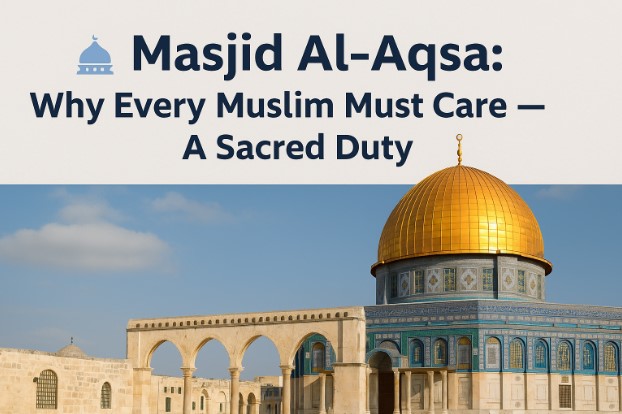
Masjid Al-Aqsa: Not Just a Mosque, But a Legacy Masjid Al-Aqsa is not just a historic structure — it is the soul of Islamic heritage and a divine trust upon the Ummah. Mentioned directly in the Qur’an and emphasized in authentic Hadith. Al-Aqsa is the third holiest site in Islam after Makkah and Madinah. Yet, this sacred mosque today stands under occupation, surrounded by injustice, while much of the Muslim world remains silent. This is not just Palestine’s test — this is the Ummah’s trial. 🌟 The Qur’an on Al-Aqsa: A Blessed Land وَءَاتَيْنَا مُوسَى ٱلْكِتَـٰبَ وَجَعَلْنَـٰهُ هُدًۭى لِّبَنِىٓ إِسْرَٰٓءِيلَ أَلَّا تَتَّخِذُوا۟ مِن دُونِى وَكِيلًۭا ٢ And We gave Moses the Scripture and made it a guide for the Children of Israel, ˹stating:˺ “Do not take besides Me any other Trustee of Affairs, 📖 Surah Al-Isra (17:2-4) Even the context of Bani Israel and their corruption ties into this land, showing that its sanctity has been under threat through time. 🤲 Hadith: The Prophet ﷺ on Visiting Al-Aqsa حَدَّثَنَا عَلِيٌّ، حَدَّثَنَا سُفْيَانُ، عَنِ الزُّهْرِيِّ، عَنْ سَعِيدٍ، عَنْ أَبِي هُرَيْرَةَ ـ رضى الله عنه ـ عَنِ النَّبِيِّ صلى الله عليه وسلم قَالَ “ لاَ تُشَدُّ الرِّحَالُ إِلاَّ إِلَى ثَلاَثَةِ مَسَاجِدَ الْمَسْجِدِ الْحَرَامِ، وَمَسْجِدِ الرَّسُولِ صلى الله عليه وسلم وَمَسْجِدِ الأَقْصَى ”. Narrated Abu Huraira: The Prophet (ﷺ) said, “Do not set out on a journey except for three Mosques, i.e., Al-Masjid-AI-Haram, the Mosque of Allah’s Messenger (ﷺ) , and the Mosque of Al-Aqsa, (Mosque of Jerusalem).” Sahih al-Bukhari 1189 Masjid Al-Aqsa is the only mosque outside Makkah and Madinah that the Prophet ﷺ specifically instructed us to visit. This shows its unmatched spiritual rank. 💔 Why Every Muslim Must Care 1️⃣ Because It Was Our First Qiblah Muslims once turned toward Al-Aqsa in prayer before the Qiblah was changed to the Kaaba. This shows that the entire Ummah is spiritually linked to this holy mosque. 2️⃣ Because It’s Being Desecrated Daily attacks, desecration of prayer spaces, and entry by armed Zalimoon forces, Al-Aqsa is bleeding. The silence of Muslims only fuels the aggression. 3️⃣ Because It’s the Key to Muslim Unity If the entire Ummah united for Al-Aqsa, it could become a source of revival. Remember, Salahuddin Ayyubi did not begin liberation by battle; he began it by uniting the Ummah. 📌 Ayat Emphasizing Action & Brotherhood إِنَّ ٱلَّذِينَ ءَامَنُوا۟ وَهَاجَرُوا۟ وَجَـٰهَدُوا۟ بِأَمْوَٰلِهِمْ وَأَنفُسِهِمْ فِى سَبِيلِ ٱللَّهِ وَٱلَّذِينَ ءَاوَوا۟ وَّنَصَرُوٓا۟ أُو۟لَـٰٓئِكَ بَعْضُهُمْ أَوْلِيَآءُ بَعْضٍۢ ۚ وَٱلَّذِينَ ءَامَنُوا۟ وَلَمْ يُهَاجِرُوا۟ مَا لَكُم مِّن وَلَـٰيَتِهِم مِّن شَىْءٍ حَتَّىٰ يُهَاجِرُوا۟ ۚ وَإِنِ ٱسْتَنصَرُوكُمْ فِى ٱلدِّينِ فَعَلَيْكُمُ ٱلنَّصْرُ إِلَّا عَلَىٰ قَوْمٍۭ بَيْنَكُمْ وَبَيْنَهُم مِّيثَـٰقٌۭ ۗ وَٱللَّهُ بِمَا تَعْمَلُونَ بَصِيرٌۭ ٧٢ Those who believed, emigrated, and strived with their wealth and lives in the cause of Allah, as well as those who gave them shelter and help, they are truly guardians of one another. As for those who believed but did not emigrate, you have no obligations to them until they emigrate. But if they seek your help ˹against persecution˺ in faith, it is your obligation to help them, except against people bound with you in a treaty. Allah is All-Seeing of what you do. Surah Al-Anfal Ayat 72: 📢 What Can You Do? (Practical Action Points) 🔹 Sponsor an Orphan or Injured Child in Gaza Directly support the most vulnerable victims by partnering with organizations that offer long-term care and rehabilitation for orphaned or wounded Palestinian children. 🔹 Host Al-Aqsa Awareness Events in Your Community Organize small gatherings, youth programs, or Jummah khutbahs dedicated to educating Muslims about Al-Aqsa and the Palestinian cause. 🔹 Integrate Al-Aqsa Into Your Salah & Family Conversations Train your heart and your home to remember Al-Aqsa. Mention it in sujood, during tahajjud, and in casual conversations with children and elders. 🔹 Switch to Ethical Shopping Apps & Directories Use tools like “Buycott” or ethical consumption guides to ensure your money doesn’t support companies complicit in Zalimoon apartheid. 🔹 Create or Share Verified Infographics & Short Videos Visual storytelling is powerful. Use Canva or other apps to design informative content and flood social media timelines with truth. 🔹 Engage in Interfaith Dialogue With Purpose Share the Palestinian narrative in churches, schools, and public forums. Build bridges to confront Israeli propaganda with facts and compassion. 🔹 Support Palestinian Business Owners & Creators Buy their products, share their art, and promote their stories. Economic empowerment and cultural preservation go hand-in-hand with resistance. 🔥 Final Words: Al-Aqsa Is a Test of Our Imaan Al-Aqsa is not asking for tears, it’s asking for action. It’s asking: “Will you defend me before I fall completely?” 📣 If the Muslim Ummah continues to sleep while Al-Aqsa cries out, we may be asked on the Day of Judgment: “When the house of Allah was under attack, what role did you play?” Will you be among those who remained silent, or those who stood up, spoke out, and sacrificed for Al-Aqsa? 📌 Masjid Al-Aqsa is a sacred trust. Protect it, honor it, speak for it.
Wake Up, Muslim Ummah: Unite for Palestine & Masjid Al-Aqsa
A Wake-Up Call for the Muslim Ummah In a time when the blessed land of Palestine is soaked with the blood of innocent Muslims, and Masjid Al-Aqsa, the first Qiblah of Islam, is under constant threat, the disunity among Muslims is our greatest weakness. While Yahood (Jews) and Nasara (Christians) have allied in political and military agendas, why we can’t unite for Palestine, the Muslim Ummah remains fragmented by sectarianism (firqa war) — Shia, Sunni, Deobandi, Barelvi, Ahl-e-Hadith, and others. But the Qur’an and Hadith are clear: this is not the time for division. It is time to unite and stand firm for our Palestinian brothers and sisters. 1️⃣ The Blood of Gaza Is a Shared Pain Every day, Palestinian mothers bury their children with trembling hands and tearful eyes. The destruction of homes, hospitals, and mosques by the Zionist regime is not a Shia or Sunni issue; it’s a Muslim issue that touches every believer’s heart. إِنَّمَا ٱلْمُؤْمِنُونَ إِخْوَةٌۭ فَأَصْلِحُوا۟ بَيْنَ أَخَوَيْكُمْ ۚ وَٱتَّقُوا۟ ٱللَّهَ لَعَلَّكُمْ تُرْحَمُونَ ١٠ The believers are but one brotherhood, so make peace between your brothers. And be mindful of Allah so you may be shown mercy. 📖 Surah Al-Hujurat, 49:10 Palestinians are not asking whether we’re Sunni or Shia, they’re asking: “Will the Ummah stand with us? Will you feel our pain as your own?” If we stay divided today, we fail the very bond of brotherhood that the Qur’an commands us to uphold. 2️⃣ Qur’anic Warning: Don’t Take Yahood & Nasara as Allies Many Muslim nations seek peace treaties and economic deals with Zionist-controlled states, but the Qur’an strongly warns against this: ۞ يَـٰٓأَيُّهَا ٱلَّذِينَ ءَامَنُوا۟ لَا تَتَّخِذُوا۟ ٱلْيَهُودَ وَٱلنَّصَـٰرَىٰٓ أَوْلِيَآءَ ۘ بَعْضُهُمْ أَوْلِيَآءُ بَعْضٍۢ ۚ وَمَن يَتَوَلَّهُم مِّنكُمْ فَإِنَّهُۥ مِنْهُمْ ۗ إِنَّ ٱللَّهَ لَا يَهْدِى ٱلْقَوْمَ ٱلظَّـٰلِمِينَ ٥١ O believers! Take neither Jews nor Christians as guardians—they are guardians of each other. Whoever does so will be counted as one of them. Surely, Allah does not guide the people who do wrong. (Surah Al-Ma’idah, 5:51) This clear verse leaves no room for ambiguity. The enemy is united — why aren’t we? 3️⃣ Hadith Proof: The Ummah Is One Body At a time when innocent lives are being taken in Palestine, and the cries of oppressed children echo across the globe, we must revisit the words of our beloved Prophet Muhammad ﷺ. He didn’t just describe the Ummah with metaphor he gave us a living, breathing image of what true Muslim unity should feel like. “The similitude of believers in regard to mutual love, affection, fellow-feeling is that of one body; when any limb of it aches, the whole body aches, because of sleeplessness and fever.” 📘 Sahih Muslim, Hadith 2586 Gaza is bleeding. Palestine is in fever. Yet we remain in our silos of sectarian pride. This is not Islam, this is our collective failure as an Ummah. 4️⃣ Sectarian Division: A Tool of the Enemy The enemies of Islam use divide-and-rule to weaken us. Our sectarian debates play into their strategy. A divided Ummah cannot liberate Al-Aqsa. وَأَطِيعُوا۟ ٱللَّهَ وَرَسُولَهُۥ وَلَا تَنَـٰزَعُوا۟ فَتَفْشَلُوا۟ وَتَذْهَبَ رِيحُكُمْ ۖ وَٱصْبِرُوٓا۟ ۚ إِنَّ ٱللَّهَ مَعَ ٱلصَّـٰبِرِينَ ٤٦ Obey Allah and His Messenger and do not dispute with one another, or you would be discouraged and weakened. Persevere! Surely Allah is with those who persevere. (Surah Al-Anfal, 8:46) Let’s not hand our strength to the Zionists by fighting over fiqh differences. The real battle is not between Muslims — it’s against injustice. 5️⃣The Salahuddin Strategy: Unity Before Liberation Salahuddin Ayyubi (RA) did not reclaim Al-Quds by mere emotional slogans or political games; he began with the hardest yet most essential task: uniting the Muslim ranks. He brought together Sunni and Shia, Arabs and Kurds, scholars and warriors, under the single cause of liberating Palestine from Crusader occupation. It was not theology, but the concept of tawheed of purpose, that made his mission successful. Today, we don’t need louder sectarian voices; we need leaders and believers with the Salahuddin mindset: those who put Ummah over identity, liberation over labels, and Al-Aqsa over ego. Victory will never come to a divided house. Palestine will only be freed when we stand as one Ummah, just as Salahuddin taught us through his legacy. 6️⃣ Islamic Rulings on Helping the Oppressed When injustice spreads and the cries of the oppressed reach the skies, a true Muslim doesn’t stay silent; he stands up, speaks out, and acts. In Islam, helping the oppressed is not a gesture of charity; it is a divine duty that directly reflects the strength of one’s Imaan. يَـٰٓأَيُّهَا ٱلَّذِينَ ءَامَنُوا۟ لَا تُحِلُّوا۟ شَعَـٰٓئِرَ ٱللَّهِ وَلَا ٱلشَّهْرَ ٱلْحَرَامَ وَلَا ٱلْهَدْىَ وَلَا ٱلْقَلَـٰٓئِدَ وَلَآ ءَآمِّينَ ٱلْبَيْتَ ٱلْحَرَامَ يَبْتَغُونَ فَضْلًۭا مِّن رَّبِّهِمْ وَرِضْوَٰنًۭا ۚ وَإِذَا حَلَلْتُمْ فَٱصْطَادُوا۟ ۚ وَلَا يَجْرِمَنَّكُمْ شَنَـَٔانُ قَوْمٍ أَن صَدُّوكُمْ عَنِ ٱلْمَسْجِدِ ٱلْحَرَامِ أَن تَعْتَدُوا۟ ۘ وَتَعَاوَنُوا۟ عَلَى ٱلْبِرِّ وَٱلتَّقْوَىٰ ۖ وَلَا تَعَاوَنُوا۟ عَلَى ٱلْإِثْمِ وَٱلْعُدْوَٰنِ ۚ وَٱتَّقُوا۟ ٱللَّهَ ۖ إِنَّ ٱللَّهَ شَدِيدُ ٱلْعِقَابِ ٢ O believers! Do not violate Allah’s rituals ˹of pilgrimage˺, the sacred months, the sacrificial animals, the ˹offerings decorated with˺ garlands, nor those ˹pilgrims˺ on their way to the Sacred House seeking their Lord’s bounty and pleasure. When the pilgrimage has ended, you are allowed to hunt. Do not let the hatred of a people who once barred you from the Sacred Mosque provoke you to transgress. Cooperate in goodness and righteousness, and do not cooperate in sin and transgression. And be mindful of Allah. Surely Allah is severe in punishment. 📖 Surah Al-Ma’idah (5:2) Supporting Palestine is not optional, it’s a fard (obligation) on every Muslim who believes in justice, mercy, and the unity of the Ummah. 7️⃣ What Every Muslim Can Do for Palestine The Ummah’s strength lies not only in prayer but also in action. Here are 10 practical and essential ways we can support Palestine today, not tomorrow. 🔹 Stop Sectarian Arguments — End useless debates online and offline. Unity starts with silence over division. 🔹 Teach Children
🗾 Halal Travel Guide to Japan for First-Time Muslim Visitors
Japan, a land of temples, sakura blossoms, high-speed trains, and rich traditions, is becoming an increasingly Muslim-friendly destination. While the country has a small native Muslim population, its tourism sector is stepping up to welcome halal-conscious travelers. This Halal Travel Guide to Japan explores Tokyo’s halal ramen shops to Osaka’s prayer spaces in malls, and even halal-certified wagyu beef in Kyoto, Japan, now offers a travel experience where faith and fun walk hand in hand. In this halal travel guide, we’ll help you plan your first-ever trip to Japan with confidence, the Islamic way! 🌏 Why Japan is a Top Destination for Halal Travelers ✅ Excellent public transport system (even in remote areas) ✅ Clean, safe, and respectful society ✅ Increasing number of halal restaurants and Muslim-friendly hotels ✅ Growing efforts by the Japan Tourism Agency for inclusive tourism ✅ Blend of futuristic tech + deep-rooted Islamic awareness in urban areas 🔗 Visit: https://www.japan.travel/en/app/ Plan routes, get updates, and find halal options. 🍱 Halal Travel Guide to Japan: What & Where to Eat While Japan is famous for sushi and ramen, it now offers certified halal versions of local cuisine in big cities. 🏙️ Tokyo: Gyumon Halal Yakiniku – Wagyu beef BBQ (Shibuya) 🌐 https://www.halalgourmet.jp/restaurant/156 Ramen Ouka – Halal chicken ramen with spicy miso (Shinjuku) 🌐 https://halal-navi.com/place/ramen-ouka 🏯 Kyoto: Ganko Sushi Kyoto Station – Offers Muslim-friendly set menus Naritaya Halal Ramen near Gion 🌐 https://naritaya-kyoto.jp 🛍️ Osaka: Matsuri Restaurant – Fully halal, prayer space available 🌐 https://matsuri-osaka.com 📱 Use: ✅ Halal Navi 🕌 Mosques & Prayer Spaces in Japan While Japan doesn’t have mosques in every city, prayer rooms are now common in malls, airports, and major tourist zones. 🕌 Major Mosques: Tokyo Camii Mosque – Largest in Japan with Turkish café 🔗 tokyocamii.org Kyoto Mosque (KICC) – Peaceful prayer space in Kyoto Osaka Mosque – Muslim community hub in Osaka Kobe Mosque – Japan’s oldest mosque, built in 1935 ✈️ At Airports: Haneda & Narita (Tokyo): Multi-faith rooms with wudhu area Kansai Airport (Osaka): Separate Islamic prayer space Chubu Airport (Nagoya): Halal food corner + prayer room 🧭 Pro Tip: https://play.google.com/store/apps/details?id=com.app.qibla. connect for Qibla and prayer times. 🏨 Muslim-Friendly Hotels in Japan While Japan doesn’t have a large number of halal hotels, many accommodations are now Muslim-conscious with features like: ✔️ Halal or vegetarian meals ✔️ Qibla direction & prayer mats upon request ✔️ Proximity to mosques or prayer rooms Top Picks: Hotel Gracery Shinjuku (Tokyo) – Near halal restaurants Sakura Terrace The Gallery (Kyoto) – Offers vegetarian buffet options Swissôtel Nankai (Osaka) – Staff trained in Muslim hospitality Hotel Mystays Premier Narita – Halal meals on request near the airport 🛎️ Search via: 🌐 https://muslim-friendly.jp (Official Muslim Travel Japan) 🧳 Top Muslim-Friendly Places to Visit in Japan 📍 Tokyo: Asakusa & Senso-ji Temple (culture + Muslim restaurants nearby) Shibuya Crossing & Halal shopping in Takeshita Street Ueno Park & Zoo (great for families) 📍 Kyoto: Arashiyama Bamboo Grove Fushimi Inari Shrine – Long walking trail, scenic views Nishiki Market – Has Muslim-friendly options & souvenir shopping 📍 Osaka: Osaka Castle & halal food in Dotonbori Universal Studios Japan (ask for vegetarian options in advance) 📍 Nara: Nara Deer Park – Great for kids Friendly for a picnic with packed halal snacks 📱 Travel Apps for Muslims in Japan App Use Halal Navi Find halal restaurants, prayer rooms Navitime for Japan Public transport planner Japan Travel by JNTO Official, reliable city guides Google Translate For reading ingredients & restaurant menus Qibla Connect Prayer times + Qibla 📅 Good Time to Visit Japan Season Months Highlights 🌸 Spring March–May Cherry blossoms & clear skies ☀️ Summer June–Aug Festivals, beach areas 🍁 Autumn Sept–Nov Fall colors & cooler temps ❄️ Winter Dec–Feb Snow festivals, halal ski resorts in Hokkaido ⚠️ Avoid Golden Week (late April–early May) due to high tourist volume. 🧳 Bonus Travel Tips for Halal Visitors 🧕 Dress modestly — highly respected in Japanese culture 🙏 Carry a small prayer mat + refillable wudhu bottle 🍙 Pack halal snacks for long travel days 📲 Save places on Google Maps before travel 📷 Most tourist areas now have QR translation codes for menus! 🧭Conclusion Japan might not be the first country you think of for halal travel, but it’s time to change that. With growing efforts to welcome Muslim tourists, this country now offers a balance of faith, flavor, and fascination like no other. Whether you’re trying halal wagyu, praying in a quiet mosque in Kyoto, or watching cherry blossoms fall in Tokyo, Japan offers memories that respect your values. ✈️ Pack your prayer mat and your sense of adventure, your halal journey to Japan starts here!
🌿 Pakistan’s Most Beautiful Travel Spots for Nature Lovers 🌲
Pakistan is a land of Most Beautiful Travel Spots, untouched valleys, majestic mountains, and sparkling rivers a dream come true for anyone who loves nature. From the lush green fields of Swat to the snow-covered peaks of Hunza, Pakistan offers some of the most scenic destinations in Asia. Whether you’re a local explorer or an international tourist, this guide highlights the top nature-friendly places in Pakistan that combine beauty, peace, and adventure. 🌄 Why Visit Pakistan for Nature Tourism? Few destinations offer raw landscapes and rich hospitality like Pakistan. Here’s why it should be on your nature-travel bucket list: 🌱 Unspoiled natural beauty, far from commercial chaos 💸 Budget-friendly compared to European nature hotspots 🕌 Deep cultural roots with hospitable locals 🏕️ Excellent for hiking, camping, and off-grid eco-experiences 🧘♂️ Less tourist traffic — perfect for slow, peaceful travel 🚐 Improving road networks and transport to northern regions 🏔️ Pakistan’s Most Beautiful Travel Spots 📍 Hunza Valley – Heaven on Earth Tucked in Gilgit-Baltistan, Hunza is framed by snowy peaks and known for its clean air, cherry blossom trees, and peaceful silence. It’s one of the most photogenic locations in all of South Asia. ✨ Don’t miss: Attabad Lake’s glacial-blue waters Ancient Baltit and Altit Forts The jagged, surreal Passu Cones 🗓️ Best time to go: April to October 📍 Swat Valley – The Switzerland of Pakistan Once a royal kingdom, Swat now invites nature lovers with its rivers, forests, and alpine views. The weather remains mild for most of the year, making it ideal for family getaways. 🎯 Must-visit spots include: Malam Jabba for snow sports and scenic chairlifts Fizagat Park for relaxed picnics Mahodand Lake near Kalam for boating and photography 🗓️ Go between March and November for the full bloom. 📍 Skardu – Raw & Rugged Beauty Skardu offers unmatched views of the Karakoram Range and is gateway to K2. 🌟 Must Visit: Shangrila Lake (aka Lower Kachura) Satpara Lake Deosai National Park – home to Himalayan wildlife 🧭 Pro Tip: Book 4×4 jeeps in advance via local guides. 📍 Fairy Meadows – A Nature Lover’s Dream With a wooden cabin under the sky and Nanga Parbat in the backdrop, Fairy Meadows is one of Pakistan’s most iconic spots. 🎒 Adventure Alert: Hike or horse ride is needed 🏕️ Camping is highly recommended 🌌 Milky Way viewing is unmatched 📍 Neelum Valley (Azad Kashmir) – The Emerald Belt This region boasts thick pine forests, rivers, and hillside villages. 🌟 Must Visit: Keran & Arang Kel Sharda (ancient ruins + greenery) Ratti Gali Lake (accessible by jeep + short trek) 🌿 Lesser-Known Nature Gems (Hidden Treasures) Spot Location Why Go? Gorakh Hill Sindh “Mini Murree” with a desert-sky combo Soon Valley Punjab Lakes, forests, and waterfalls Hingol National Park Balochistan Canyons, wildlife & Makran coast Khunjerab Pass GB Snowy border with China; yaks and Ibexes Rama Meadows Astore Great camping base near Nanga Parbat 🏨 Nature-Lover Accommodation Tips Area Best Stay Type Notes Hunza Guesthouses or eco-lodges Try Serena Altit Inn or local Airbnb Swat Hotels or resorts Shelton Rezidor or Rock City Resort Skardu Lakeside lodges or tents Book via local travel groups Fairy Meadows Wooden huts or camps Reserve early in summer months 💡 Booking Tip: Use Bookme.pk or FindMyAdventure for local packages. 📱 Helpful Travel Apps in Pakistan App Use SastaTicket.pk Book flights, hotels, transport Google Maps (Offline mode) Mountain navigation WeatherPK Local weather alerts Karavan Find eco-tourism spots & road trips PakTrekker (new) Connect with local nature guides 📅 Best Time to Travel for Nature Season Months Ideal Locations 🌸 Spring Mar–May Swat, Neelum, Hunza blossom season ☀️ Summer Jun–Aug Skardu, Fairy Meadows, Deosai 🍂 Autumn Sept–Oct Hunza & Skardu (Golden leaves) ❄️ Winter Dec–Feb Gorakh Hill, Murree, Malam Jabba 🚫 Avoid monsoon in July-August for Kashmir & Gilgit treks These Were Pakistan’s Most Beautiful Travel Spots Pakistan is a paradise waiting to be explored by nature lovers, hikers, eco-tourists, and spiritual wanderers. Whether it’s a sunrise in Hunza or a starry night in Fairy Meadows, the journey will leave your heart full and your camera roll full. 📌 Start your nature escape in Pakistan discover landscapes untouched by time and full of life.
Prophet Muhammad ﷺ’s 3 favorite Sunnah foods
Eating in the way of Prophet Muhammad ﷺ is not just a tradition, it’s a Sunnah that brings blessings and balance to our lives. In today’s world of processed foods, his natural diet is an example of healthy and Halal living. Among his beloved foods were Pumpkin, Dates, and Figs, each carrying unique health benefits and spiritual value. These foods are also honored in the Qur’an and Hadith, making them special for every Muslim. Their simplicity, nutrition, and connection to faith make them powerful Sunnah foods. 👉 Explore more on Sunnah-based Halal eating in our guide: Halal Food & Sunnah Nutrition 🥣 1. Pumpkin – The Beloved Dish of the Prophet Pumpkin (Arabic: Qar’a) was deeply loved by the Prophet Muhammad ﷺ. Among the many natural foods he ate, pumpkin holds a unique place in the Hadith. It is one of the few foods described in such personal detail. The Prophet ﷺ would pick pieces of pumpkin from a dish while eating, clearly showing his affection for it. 📜 Hadith Reference: Anas ibn Malik (RA) said: “I saw the Messenger of Allah ﷺ being served with a dish that had pumpkin in it, and he began to eat it. I have liked pumpkin ever since I saw the Prophet ﷺ eating it.” (sahih muslim 2041b) This narration reflects the love and attention the Prophet ﷺ gave to wholesome, simple foods. His eating habits continue to inspire Muslims seeking to live a pure and balanced life. 🌿 Health Benefits of Pumpkin (Modern Nutrition): High in beta-carotene – supports healthy vision and immunity Rich in antioxidants – helps reduce inflammation Excellent source of fiber – aids digestion and gut health Low in calories but nutrient-rich – ideal for a healthy weight and energy Pumpkin can be added to stews, soups, rice dishes, or even roasted, making it an easy Sunnah food to include in your daily Halal meals. 🌴 2. Dates – The Prophetic Ifṭār Favorite Dates (Arabic: Tamr) were the Prophet Muhammad ﷺ’s preferred choice to break his fast. Whether fresh or dried, they were eaten before Maghrib prayer as a blessed and nourishing Sunnah. 📜 Hadith Reference: The Messenger of Allah (ﷺ) used to break his fast before praying with some fresh dates; but if there were no fresh dates, he had a few dry dates, and if there were no dry dates, he took some mouthfuls of water (Sunan Abū Dāwūd, 2356) 🌿 Health Benefits of Dates (Modern Nutrition): Packed with natural sugars like glucose and fructose—ideal for quick post-fast energy Rich in dietary fiber, aiding digestion and gut health Contains potassium, magnesium, and antioxidants, supporting heart health and reducing inflammation A wholesome, nutrient-rich option with zero processed ingredients Including dates in your ifṭār not only follows Sunnah but also provides practical health benefits. They can also be blended into smoothies, chopped into oatmeal, or enjoyed on their own after sunset. 🌿 3. Figs – The Blessed Fruit of Paradise Figs (Arabic: Teen) hold a special place in Islam, with Allah Himself swearing by them in the Qur’an, and the Prophet ﷺ acknowledging their heavenly nature. Though the hadith about their daily consumption is fewer, their spiritual and health significance is clear. 📖 Qur’anic Reference: وَٱلتِّينِ وَٱلزَّيْتُون١ By the fig and the olive ˹of Jerusalem˺ 🌿 Health Benefits of Figs (Modern Nutrition): High in dietary fiber – promotes digestion and may reduce cholesterol Rich in potassium, magnesium, and calcium – supports heart, muscle, and bone health Contains antioxidants – helps combat inflammation and oxidative stress Offers natural sweetness without refined sugars—great for healthy snacking Figs can be enjoyed fresh or dried, added to smoothies, paired with nuts, or used in desserts and breakfast recipes. Their unique flavor and natural benefits make them an excellent Sunnah snake. ✅ Conclusion Following the food habits of Prophet Muhammad ﷺ is a beautiful way to bring Sunnah into our daily lives. Pumpkin, Dates, and Figs are not only blessed foods but also full of natural health benefits. Their mention in Hadith and Qur’an shows their spiritual and physical value. By adding them to our meals, we honor both our health and our faith. True Sunnah nutrition is simple, pure, and powerful.
The Legacy of Hazrat Umar Farooq (RA): The Lion of Justice and Strength of Islam
https://youtube.com/shorts/XE8Jsh_usGU Introduction: Among the blessed companions of Prophet Muhammad ﷺ, Hazrat Umar Farooq (RA) shines as a beacon of justice, wisdom, and unmatched leadership. He was not just a warrior on the battlefield but a true servant of Islam whose life continues to inspire billions across centuries. From his unwavering love for the Prophet ﷺ to his fear of accountability before Allah, Umar ibn al-Khattab stands as a model of a righteous ruler, a fearless commander, and a humble believer. 🌟 His Acceptance of Islam: A Turning Point for Muslims Umar (RA) was once among the fiercest opponents of Islam. But his heart turned when he encountered the divine words of the Qur’an. Surah Taha touched him deeply and transformed his soul. The Prophet ﷺ had prayed: “O Allah, strengthen Islam with either of the two Umars…”(Sunan al-Tirmidhi 3681) Allah chose Umar ibn Al-Khattab, and his acceptance marked a new chapter of strength for the Muslim Ummah. He openly declared his faith and walked into the Kaaba to pray, challenging the Quraysh without fear. 🤝 His Closeness to Prophet Muhammad ﷺ Hazrat Umar (RA) was one of the closest companions to the Prophet ﷺ. He was among the Asharah Mubasharah (the ten promised Jannah). His counsel, sincerity, and firmness earned him the Prophet’s ﷺ highest praise. The Messenger of Allah ﷺ said: “If there were to be a prophet after me, it would be Umar ibn Al-Khattab.”(Sunan al-Tirmidhi 3686; Sahih) And in Sahih al-Bukhari 3689, the Prophet ﷺ said: “Among the nations before you there were ‘Muhaddathun’ (people who were inspired). If there is any such person among my followers, it is Umar.” This is a powerful testimony to his spiritual connection with Allah — being divinely guided in his decisions. 🛡️ The Caliph of the Believers – His Rule & Contributions After the martyrdom of Abu Bakr As-Siddiq (RA), Hazrat Umar (RA) was appointed as the 2nd Caliph of Islam. His reign lasted 10 years, and during this time, Islam spread far beyond the borders of Arabia. ✅ Key Achievements: Conquered major empires like Rome and Persia. Introduced Bayt al-Mal (public treasury). Established the Hijri calendar. Appointed judges and governors with accountability. Introduced welfare systems for the poor, elderly, widows, and orphans. Laid down the administrative foundation for the Muslim empire with justice, transparency, and discipline. Hazrat Umar (RA) was known to patrol the streets of Madinah at night, caring for his people, feeding the hungry, and checking on the state of the Ummah. 🕋 What the Qur’an Said About Umar (RA) Though not named directly, several verses were revealed confirming his opinions. ✅ Example 1: When Umar (RA) suggested that the wives of the Prophet ﷺ observe hijab, Allah revealed the verse of Hijab: “And when you ask them (the wives) for anything, ask them from behind a veil…”(Surah Al-Ahzab: 53) ✅ Example 2: Regarding the prisoners of Badr, the Prophet ﷺ accepted Abu Bakr’s advice. But Allah later confirmed Umar’s stricter opinion through revelation (Surah Al-Anfal: 67). These moments show how aligned Umar’s heart was with divine command — a proof of his depth in understanding and fear of Allah. His Martyrdom – A Day of Grief for the Ummah On 1st Muharram, 23 AH, Hazrat Umar (RA) was attacked by Abu Lu’lu’, a Persian slave, while leading Fajr prayer in Masjid al-Nabawi. Despite his injuries, Umar (RA) appointed a shura (consultation council) to choose the next caliph — a mark of his foresight and commitment to unity. He returned to his Lord at the age of 63. His burial place lies next to Prophet Muhammad ﷺ and Abu Bakr As-Siddiq (RA) — fulfilling his dream of resting beside his beloved ﷺ. 🕊️ Final Reflections Hazrat Umar Farooq (RA) was a man of steel and tears. Strong against injustice, but tender-hearted in private worship. His life was filled with taqwa, leadership, and deep love for Allah and His Messenger ﷺ. On this Yaum-e-Shahadat, let us: 🌙 Reflect on his legacy 🛐 Make dua for him and for ourselves to follow his footsteps 📚 Teach our children about the real heroes of Islam 🧡 Conclusion: Hazrat Umar (RA) was more than a caliph — he was a gift to Islam. His legacy is a reminder that true leadership comes with fear of Allah, service to the Ummah, and uncompromising justice. May Allah be pleased with him, elevate his status, and guide us all to follow his path of sincerity, truth, and sacrifice.Ameen.
Muslim Friendly Places in Switzerland
✨ Introduction Switzerland may be famous for its snow-covered Alps, luxury watches, and chocolates but did you know it’s also becoming an increasingly Muslim friendly travel destination? From halal restaurants in Geneva to prayer spaces in Zurich, Switzerland is quietly accommodating the needs of Muslim travelers without compromising on its world-class tourism experience. Whether you’re a solo traveler or coming with family, this guide covers the best places to explore while staying aligned with your faith. 🌍 Why Visit Switzerland as a Muslim Traveler? ✅ Peaceful, safe, and ultra-clean environment ✅ Easy access to halal food and prayer rooms in major cities ✅ Switzerland has a growing Muslim population, mainly in urban areas ✅ Public transport is world-class and easy to navigate ✅ English is widely understood in tourist areas ✅ Breathtaking views, diverse cultures, and respectful locals 🕌 Major Muslim-Friendly Cities in Switzerland 📍 Zurich Switzerland’s largest city with a diverse Muslim community Offers multiple halal restaurants, Turkish bakeries, and mosques Clean, modern, and well-connected to nature Must-Visit: 🕌 Zurich Mosque (Mahmud Mosque) – First mosque in Switzerland 🛍️ Bahnhofstrasse – Luxury shopping and family-friendly vibes 🌊 Lake Zurich – Stunning lake views and boat cruises 📍 Geneva Home to many international organizations and a welcoming vibe Excellent halal food options & Turkish, Lebanese, and North African cuisine Multiple prayer rooms across the city Must-Visit: Islamic Cultural Foundation of Geneva (ICFG) – Mosque and community hub Jet d’Eau fountain, Old Town, and Palais des Nations (UN HQ) 📍 Bern The capital city offers history, serenity, and Swiss charm Smaller Muslim population but still friendly and inclusive Few halal eateries and mosques available Must-Visit: 🕌 Bern Mosque – Small but well-kept prayer space 🕰️ Zytglogge (Clock Tower) and Bern’s Old Town – UNESCO Heritage site 🌳 Bear Park and Rosengarten – great for families 🍛 Halal Food in Switzerland Finding halal food at Muslim-friendly places in Switzerland is easier in urban centers. Always look for certifications or ask staff to confirm. 🏙️ Top Halal Restaurants Restaurant City Cuisine Le Cèdre Geneva Lebanese, halal-certified Tandoori BBQ Zurich Indian/Pakistani Al Arz Lausanne Lebanese Royal Istanbul Bern Turkish Doner & Kebabs Kervan Saray Lucerne Turkish, vegetarian-friendly 🕌 Mosques & Prayer Spaces Switzerland has over 150 mosques, Muslim Friendly Places in Switzerland mainly located in large cities. Some offer Friday (Jumuah) prayers, Islamic lectures, and women’s prayer halls. 🛐 Major Prayer Spaces: Mahmud Mosque – Zurich Geneva Mosque (ICFG) Islamisches Zentrum Bern Masjid Noor – Basel Lausanne Islamic Center ✈️ At Airports: Zurich and Geneva airports have multi-faith prayer rooms. Ask information desks for directions. 🏔️ Muslim-Friendly Scenic Destinations Switzerland is paradise for nature lovers and most locations are easily accessible by train or cable car. No need to worry about food or prayers when you plan properly. 🌟 Must-Visit Places: Interlaken – Between two lakes, surrounded by Alps Lauterbrunnen Valley – Stunning waterfalls & halal picnic spots Zermatt – Home of the Matterhorn; great for skiing & hiking Lucerne – Old Town charm, halal restaurants, and lake cruises Mount Titlis – Cable car to snowy peaks, vegetarian meals at the top 💡 Tip: Bring a portable prayer mat and download Qibla apps for remote locations. 🏨 Muslim-Friendly Hotels Some hotels may not be officially halal, but they are respectful of Muslim needs: Hotel City Features Hotel Glockenhof Zurich Halal food options nearby, quiet rooms Hotel Cornavin Geneva Close to mosque & halal restaurants Hotel Alpha Lucerne Budget-friendly, vegetarian meals Hotel Bernerhof Interlaken Mountain view, easy transport 🔗 Use platforms like HalalBooking.com or Airbnb (with kitchen filters) for better control over your meals. 📱 Useful Apps for Muslim Travelers in Switzerland App Purpose HalalTrip Europe Map Tool View halal spots & mosques via web map Swiss Halal Guide App (if available regionally) Local halal restaurants (user-based) Qibla Compass Kaaba Finder Offline Qibla direction with compass Salaat First Beautiful, offline Islamic prayer time app SBB Mobile Swiss public transport app 📅 Best Time to Visit Switzerland Season Month Why Go ☀️ Summer June–Aug Hiking, green valleys, long days 🍂 Autumn Sept–Nov Golden trees, fewer crowds ❄️ Winter Dec–Feb Snow, skiing, Alpine villages 🌸 Spring Mar–May Flower fields, pleasant weather 🧭 Conclusion Switzerland offers far more than postcard landscapes it’s a welcoming and safe destination for Muslim travelers who want to enjoy nature, history, and culture without compromising their values. Whether you’re watching the sunrise over the Alps or finding a cozy halal spot in the Old Town of Geneva, this journey can be spiritual and scenic all at once. Start planning your Muslim-friendly Switzerland trip today and experience Europe in its purest form.
3 Healthy Halal Drinks
📌 Introduction In Islam, health and Halal go hand in hand. A truly Halal drink is not only free from alcohol and harmful substances, but also nourishes the body and soul. Today’s Muslim consumers are becoming more health-conscious, seeking beverages that support Sunnah nutrition and well-being. Natural Halal drinks are not just refreshing—they’re a way to follow a prophetic lifestyle and care for the body Allah has entrusted us with. This blog highlights the 3 healthy Halal drinks that are energizing, pure, and aligned with Islamic dietary principles. Whether you’re fasting, working out, or simply taking a break, these Sunnah-friendly choices are both beneficial and blessed. . 🥇 1. Sugarcane Juice – Sunnah-Friendly Natural Energy Drink What Makes It Halal and Healthy? Sugarcane juice is a 100% natural and plant-based drink, free from alcohol, synthetic additives, or harmful preservatives—making it completely Halal. Packed with essential electrolytes, antioxidants, and natural sugars, it’s ideal for hydration, digestion, and boosting energy without relying on caffeine or soda. ✅Sunnah Perspective: Although not directly mentioned in Hadith, sugarcane was widely known and used in early Islamic lands for medicinal and nutritional purposes. The principles of ṭayyib (pure) and ḥalāl (lawful) fully apply to sugarcane juice. 🔍 Health Benefits: 🔹 Improves liver function and detoxification A 2015 study published in Phytotherapy Research emphasizes that sugarcane contains strong antioxidant compounds and shows liver-protecting effects, which supports its traditional use for improving liver function and managing conditions like jaundice. 🔹 Rehydrates the body quickly in hot climates – A clinical study revealed that sugarcane juice is just as effective as commercial sports drinks in maintaining hydration during physical activity, and even outperforms them post-exercise by supporting blood sugar stability and faster muscle energy (glycogen) recovery. 🔹 Supports digestion and fights fatigue naturally – Sugarcane juice is rich in minerals like potassium and magnesium, helping hydrate the body and support kidney health naturally. 🥈 2. Watermelon Juice – The Sunnah-Approved Hydration Boost What Makes It Halal and Healthy? Watermelon juice is made from pure fruit without fermentation, making it naturally Halal and hygienic. It’s a Sunnah fruit, beloved by the Prophet Muhammad ﷺ, and is praised for its high water content, vitamins A, B6, and C, as well as its antioxidant properties, such as lycopene. ✅ Hadith Reference: It was narrated that Sahl bin Sa’d said:“The Messenger of Allah (ﷺ) used to eat dates with melon.” (Sunan Ibn Majah 3326) This combination shows how watermelon was not only Halal but also preferred in the Prophet’s ﷺ diet. 🔍 Health Benefits: ✅ Excellent natural rehydration Watermelon contains over 90% water along with potassium and magnesium, making it excellent for staying hydrated and cooling the body. ✅ Supports heart health and reduces inflammation Lycopene in watermelon supports heart health by helping reduce blood pressure and inflammation, thanks to its strong antioxidant effects. ✅ Refreshes the body during fasting or hot weather Research suggests drinking watermelon juice before exercise may ease muscle soreness and speed up recovery, thanks to its citrulline and antioxidant content. 🥉 3. Dates & Banana Smoothie – Sunnah Energy in a Glass Why It’s Halal and Healthy? This smoothie is made from two powerful Sunnah foods: Dates (Ajwa or any Halal variety) and bananas, both naturally Halal and loaded with nutrients. When blended with milk or yogurt, it becomes a complete Halal energy drink – rich in natural sugars, potassium, fiber, and essential vitamins. ✅ Hadith Reference: The Prophet Muhammad ﷺ said: “Ajwa dates are from Paradise, and they are healing.” (Jami at Tirmidhi 2068) Dates are a recommended Sunnah food, often used to break fasts due to their high energy content and easy digestibility. 🔍 Health Benefits: ✅ Boosts brain and body energy Dates and bananas offer natural sugars and potassium that deliver quick yet steady energy without the need for caffeine. ✅ Supports digestive and heart health Both fruits are rich in dietary fiber, which helps improve digestion. Keeps you full longer, and supports healthy cholesterol levels. ✅ Ideal for suhoor, iftar, or post-workout nourishment Bananas naturally support muscle recovery by restoring energy reserves and easing post-exercise inflammation, making them excellent for rehydration and repair. ✅ Conclusion Choosing Halal and healthy drinks is more than a diet choice — it’s a step towards a faithful and balanced lifestyle. From the refreshing sugarcane juice, hydrating watermelon juice, to the Dates & Banana Smoothie inspired by Sunnah, each drink offers natural energy, spiritual value, and physical wellness. These drinks reflect the beauty of Tayyib (pure) nutrition in Islam. By incorporating such Sunnah-based beverages into our daily life, we nourish both body and soul. Let your drinks be Halal, healthy, and full of barakah.
Islamic New Year Dua – A Beautiful Start with Faith and Protection
🌙 Welcoming the Islamic New Year with Dua As the crescent of Muharram appears in the sky, Muslims across the globe welcome a new Hijri year — a sacred opportunity to renew our faith, reflect on the past, and seek blessings for the future. One powerful and authentic way to begin is with the Islamic New Year Dua, a supplication filled with hope, security, and a deep spiritual connection with Allah ﷻ. اللَّهُمَّ أَدْخِلْهُ عَلَيْنَا بِالْأَمْنِ وَالْإِيمَانِ، وَالسَّلَامَةِ وَالْإِسْلَامِ، وَجِوَارٍ مِنَ الشَّيْطَانِ وَرِضْوَانٍ مِنَ الرَّحْمَنِ“O Allah, bring this (year) upon us with security and faith, safety and Islam, protection from shaytaan and with Your Pleasure.” 🌸 The Spirit Behind the Supplication This dua reflects the core needs of a believer: Peace and security (الْأَمْنِ) Strong faith (الْإِيمَانِ) Sound health and Islam (السَّلَامَةِ وَالْإِسْلَامِ) Protection from Shaytaan Earning the pleasure of the Most Merciful (رِضْوَانٍ مِنَ الرَّحْمَنِ) It is more than just a prayer — it’s a way to realign our goals and hopes with our deen, to remind ourselves that every moment is a gift from Allah ﷻ. 🌟 Making This Year Count Begin with gratitude and repentance. Write down spiritual goals for this year — Qur’an memorization, regular fasting, charity, or improving salah. Make this dua part of your family’s yearly tradition. Reflect on the sacrifices of the early Muslims during Hijrah — let their legacy inspire yours.
Top 3 Misconceptions About Halal Food
https://youtu.be/ySBWmPiKjJI 📌 Introduction Halal food in Islam is not just a dietary rule — it’s a reflection of faith and purity. Based on the Quran and Sunnah, Halal emphasizes eating what is lawful (ḥalāl) and pure (ṭayyib), promoting both spiritual and physical well-being. Many believe Halal only relates to meat or religious rituals, but in fact, it covers hygiene, ethics, and intention. Due to global misconceptions, even Muslims may misunderstand what truly qualifies as Halal. This blog addresses the top three most common misconceptions and corrects them using facts grounded in Islamic teachings. 📖 O humanity! Eat from what is lawful and good on the earth, and do not follow Satan’s footsteps. He is truly your sworn enemy. — Surah Al-Baqarah (2:168) 🟠 1. Misconception: Halal Food is Only for Muslims Many assume that Halal food is only for Muslims, but that’s a widespread misconception. Halal food is based on principles of cleanliness, safety, and ethical treatment — values that appeal to anyone seeking pure and healthy nutrition. Halal guidelines ensure that food is free from harmful substances, processed hygienically, and prepared with compassion. That’s why more non-Muslims around the world are now choosing Halal-certified products for their health benefits, quality standards, and ethical sourcing. 📖 The Quran advises all of humanity: O you who have believed, eat from the good things which We have provided for you and be grateful to Allah if it is [indeed] Him that you.(Surah Al-Baqarah 🟠 2 Misconception : Halal Only Means No Pork or Alcohol Many people wrongly believe that Halal food simply means avoiding pork and alcohol. While it is true that these are strictly prohibited (ḥarām) in Islam, the meaning of Halal is much deeper and broader. According to Islamic dietary laws, Halal (حلال) means anything that is lawful, pure (ṭayyib), clean, and ethically prepared. That means even if a food doesn’t contain pork or alcohol, it may still not be Halal if: It contains non-Halal additives, such as gelatin or enzymes from ḥarām sources It’s made with cross-contaminated equipment The meat is not slaughtered in the Islamic way The food involves unethical treatment of animals or unclean preparation 🔍 Halal is not only about ingredients—it includes the entire process, from sourcing and slaughter to packaging and presentation. 🟠 3. Misconception: Halal Food is Always Healthy It’s a common misunderstanding that if something is Halal, it automatically means it’s healthy. While Halal ensures the food is permissible and prepared in a lawful, clean, and ethical manner, it does not guarantee that it is nutritious or free from unhealthy ingredients. For example, fried foods, sugary drinks, or highly processed snacks can all be Halal, but they may still be harmful to health if consumed in excess. Islam teaches us to eat Halal and Tayyib (pure, wholesome), which means choosing food that nourishes both the body and soul. 🧠 A balanced Halal diet includes moderation, natural ingredients, and avoids overeating, as guided by Sunnah. The Prophet Muhammad ﷺ said: Miqdam bin Madikarib said: “I heard the Messenger of Allah (ﷺ) say: ‘A human being fills no worse vessel than his stomach. It is sufficient for a human being to eat a few mouthfuls to keep their spine straight. But if he must (fill it), then one third of food, one third for drink, and one third for air.”https://hamariweb.com/islam/hadith/sunan-ibn-majah-3349/ ✅ Conclusion: Halal food goes far beyond avoiding pork or alcohol — it represents lawful, ethical, and hygienic food preparation rooted in Islamic values. True Halal includes careful sourcing, proper slaughtering, and avoiding cross-contamination or harmful additives. Understanding this full process helps Muslims maintain a pure, faith-aligned diet. Always check for Halal-certified ingredients, not just labels. Choose Halal that’s not only ḥalāl, but also ṭayyib — lawful and wholesome.